IN SHORT
Zone by zone, what gets cleaned and how often, the finishes a generic crew will ruin, and the sidewalk rules the city holds your storefront to.
A flagship store isn’t cleaned like a store. The floor, the glass, and the fitting rooms are part of what the brand is selling, so the standard is closer to a showroom than a shop. This checklist is written for the store operations managers and facility managers who run flagship and high-end retail in Manhattan. It covers every zone with the tasks that belong to it, how often each one needs attention, what a day porter handles during trading hours versus what waits for the overnight crew, the luxury finishes that get destroyed by the wrong product, and the New York City sidewalk rules that make your storefront responsible for the pavement outside it.
Most retail cleaning checklists you’ll find were written for a shop. Sweep, wipe, empty the bins, done.
A flagship’s a different building. The customer walked past four other stores to get to yours, and the first thing they read isn’t the merchandise. It’s the glass on the door, the shine on the floor, and whether the fitting room they’re about to stand in feels clean. That’s the product as much as anything on the rack. We clean flagship and high-end retail across Manhattan, and the gap between a store clean and a flagship clean shows up in about six places, every time.
Why Flagship Retail Isn’t Like Other Retail
Three things change once the store is a brand statement rather than a place to buy socks.
The finishes get expensive and unforgiving. Marble, terrazzo, polished concrete, brass, architectural glass, lacquered millwork. Every one of them has a product that will damage it, and most general-purpose cleaners are on that list. The second thing is that a lot of the cleaning happens while customers are in the store, so it has to be invisible. And third, the standard doesn’t drop on a Tuesday. A flagship’s judged the same at 10am on a slow Wednesday as it is on a Saturday afternoon, because the customer doesn’t know or care which day it is.
That’s why the checklist below is split by zone and by timing. What a porter does during trading hours and what the overnight crew does are two different lists.
The NYC Rules That Are Important To Include in Checklist
Here’s the part that surprises store managers who transferred in from another city. In New York, your store’s responsible for the sidewalk outside it, and for eighteen inches of the street past the curb.
The city’s sanitation code puts that duty on the owner, the lessee, or whoever’s in charge of the premises. It covers litter, the gutter strip, and tree pits along your frontage, and it applies whether or not your staff dropped any of it. Someone else’s coffee cup blowing into your doorway is your coffee cup now. Sanitation inspects during set enforcement windows, and the fines run from about $100 for a first offense up into the hundreds, climbing for repeat offenders.
| WHAT THE CITY EXPECTS | WHAT IT MEANS FOR THE STORE |
|---|---|
| Sidewalk and gutter | Keep the pavement along your frontage and eighteen inches into the street clear of litter. Sweepings go in a lidded bin, and not into the street or a city corner basket. |
| Snow and ice | Clear a path at least four feet wide after a storm, in the window the city allows, and don’t push the snow into the roadway. This one carries its own fine and a real slip risk at your door. |
| Waste set-out timing | Store waste goes out close to collection, not whenever the stockroom’s full, and bins come back in after pickup. Commercial waste can’t go in the public litter baskets on the corner. |
| A clear storefront | No tripping hazards, no clutter on the sidewalk. |
Where this applies in practice: the sidewalk is the one zone nobody’s job description covers, but it does, no doubt, affects the impression of the store. Sales staff figure it’s cleaning’s problem, the cleaning contract says “interior,” and the summons arrives anyway. If your store fronts a busy Manhattan block, put the sidewalk sweep in writing in somebody’s scope, with a time on it, and it stops being a question.
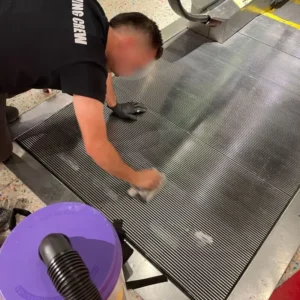
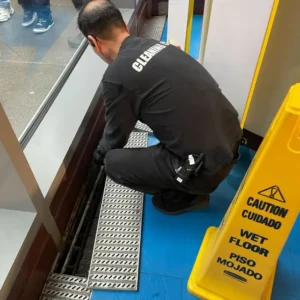
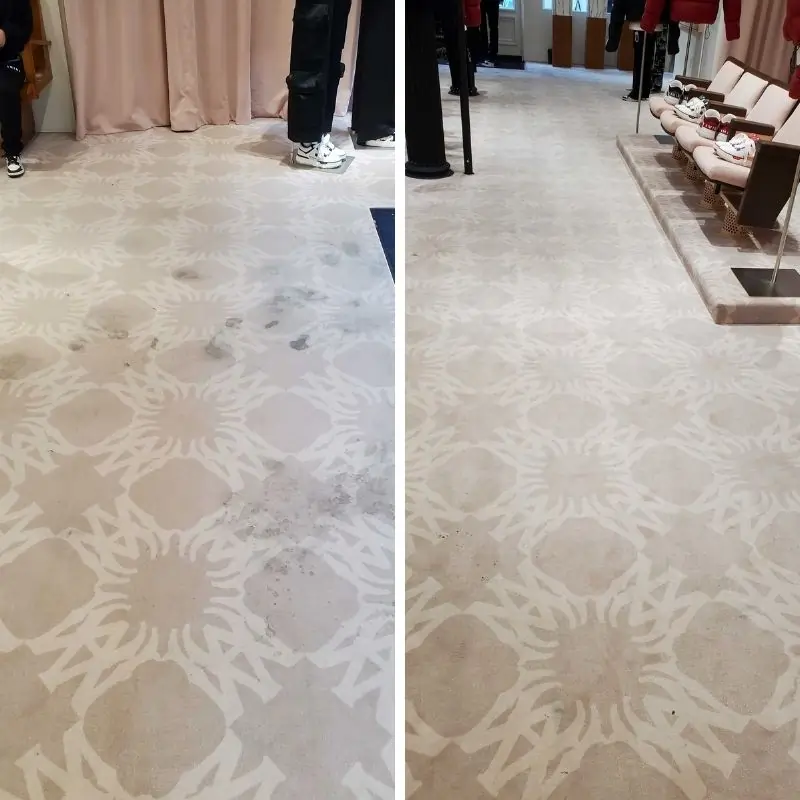
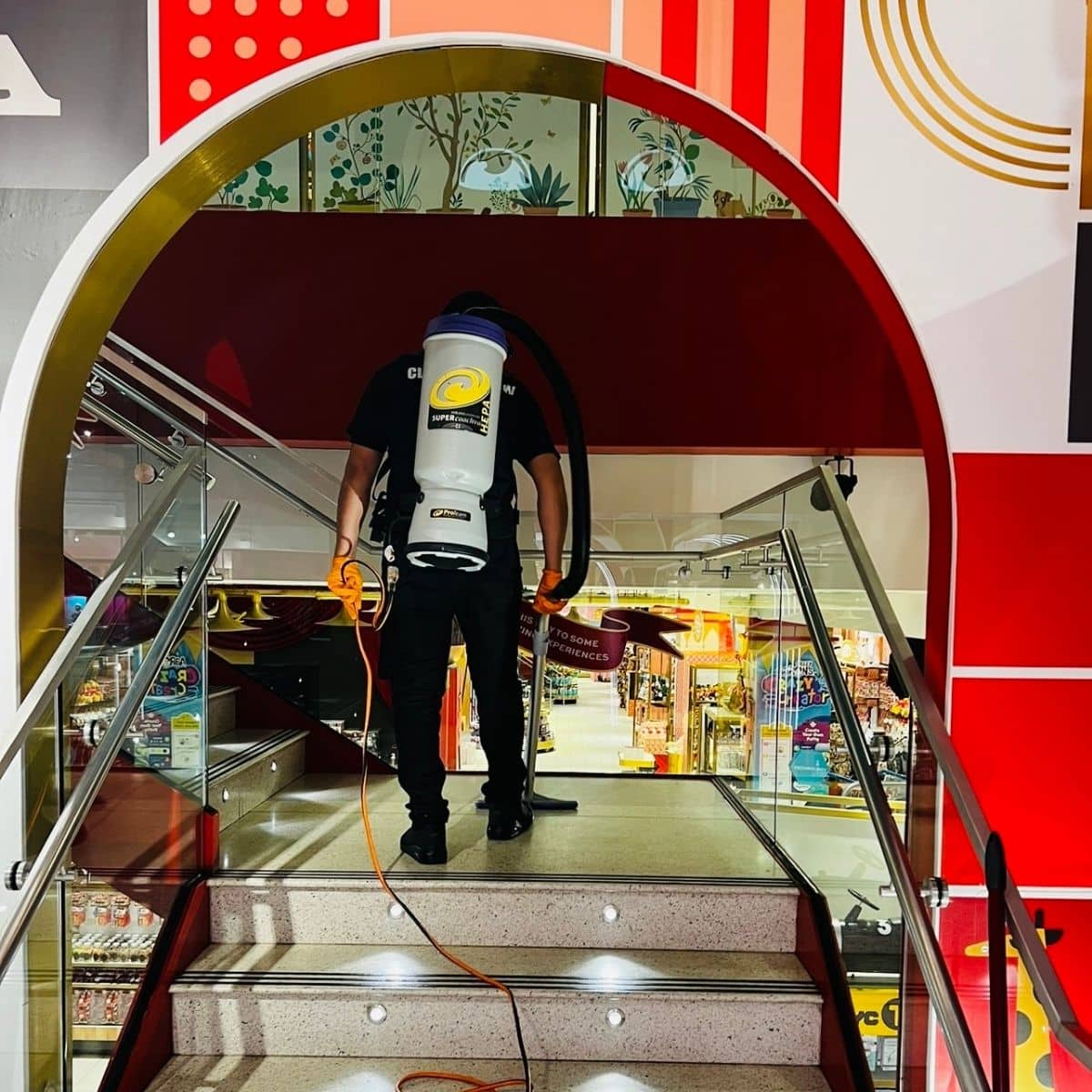
The Zone Checklists
Work these by zone. Some are quick, and some carry the store.
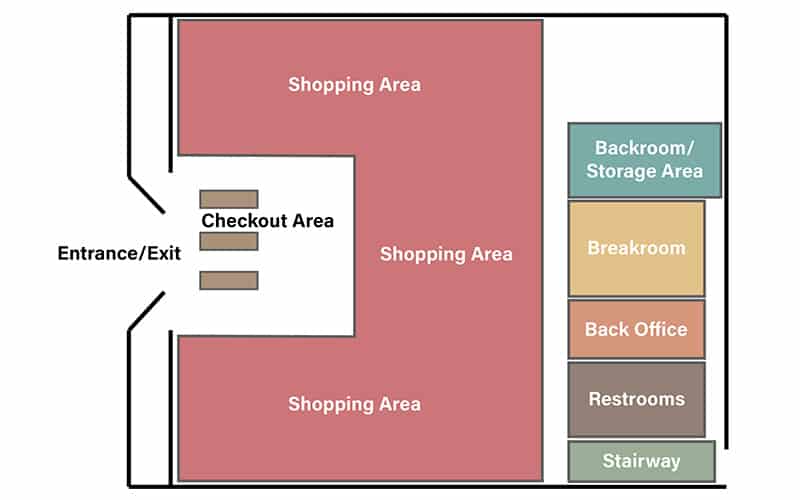
Entrance, vestibule, and storefront
Highest-visibility square footage you own, and it takes the worst of the weather and the foot traffic, with the entrance seeing heavy foot traffic and needing attention multiple times per day. entrance mats matter more than anything else here, because high-quality mats help stop dirt from being tracked into the retail space and whatever the mats don’t catch ends up ground into your floor finish. high touch surfaces at the entrance should be disinfected multiple times per day.
- Glass on doors and windows, inside and out, including the pulls and push plates
- Fingerprints off the door hardware, then disinfect the handles
- Vacuum or beat the entry matting, and lift it to clean underneath
- Wipe down signage, and the frames around it
- Sweep the sidewalk and the gutter strip, and bag the sweepings
- Empty exterior bins, clear cobwebs from the doorway and the light fixtures
- Wipe the vestibule floor, and check the transition strip for grit
- Clean planters, benches, and anything else the brand put outside
Facade, awning, and sidewalk
The daily list above keeps the storefront presentable. The facade itself is periodic work on a different cycle, and it’s the one most stores forget until the building looks tired next to the neighbour who didn’t forget.
Manhattan puts a lot on a storefront: exhaust grime, sidewalk traffic, weather, gum, flyposting, and graffiti. Stone and metal facades hold that film, awnings go grey before anyone notices because you look up at them from underneath, and the sidewalk itself stains. Pressure washing the facade, the entry surround, and the sidewalk on a schedule is what keeps a flagship from ageing out of its own block. That work sits under our specialized cleaning services, alongside graffiti removal and exterior work.
- Pressure wash the facade and the entry surround, on a cycle set by how dirty the block runs
- Wash the sidewalk and the entry apron, and check where the runoff goes
- Clean awnings and canopies, top surface included
- Remove graffiti, stickers, and flyposting as soon as it appears, since it attracts more
- Wash exterior signage and lightboxes
- Clear gum and staining from the pavement at the door
Timing this in NYC: pressure washing a storefront on a live retail block means water, hoses, and noise across a public sidewalk. It’s early-morning work before the doors open, and it needs to account for where the runoff drains, since sweeping or washing debris into the street is its own violation. Book it against your quiet trading days, not the week of a launch.
Sales floor and visual merchandising
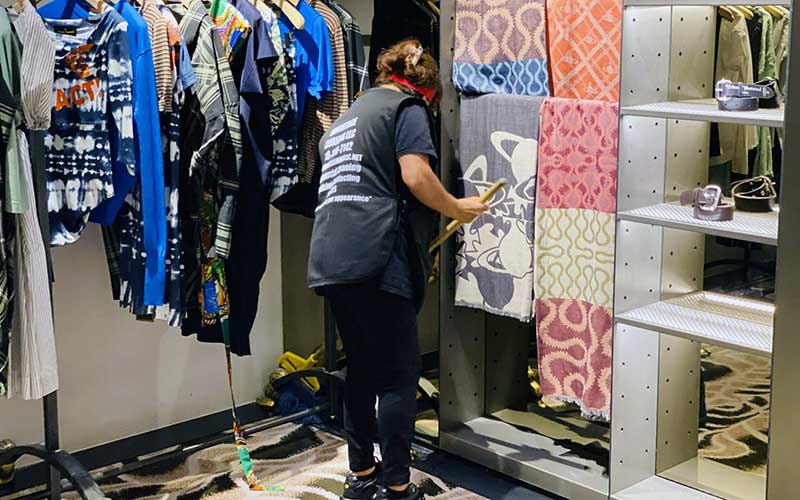
The floor and the displays are the store. This zone eats the most labor and it’s the one customers photograph, so daily cleaning on the sales floor includes keeping merchandise and product displays tidy as well as presentable.
- Dust shelving, fixtures, ledges, and the tops of display units; dust high shelves and fixtures as part of regular cleaning routines
- Clean vitrines and display cases, inside and out, no streaks under spotlights
- Wipe mannequins and plinths, and the bases where dust settles
- All glass, partitions, and mirrors
- Spot-clean carpet and upholstery, and check seating for marks
- Vacuum soft furniture and carpet, edge to edge, since daily cleaning includes vacuuming carpets, not just spot-cleaning visible marks
- Sweep and clean hard floors to the finish, not just the traffic lane
- Dust track lighting and any exposed fixtures, since it shows up in the light spill
- Clear litter, pick up dropped tags and pins, empty bins
Fitting rooms
This is the zone that decides whether someone buys, and it’s the one most stores under-clean. A customer’s about to stand there half-dressed. If there’s a smudge on the mirror or hair on the floor, that’s what they’ll remember about your brand. Every hook, latch, and bench in here gets handled all day, so the touch points want disinfecting rather than a wipe. Our facility manager’s guide to disinfection covers how that’s done properly, and when a facility should be disinfected covers how often.
- Mirrors, full height, no streaks and no haze at the edges
- Vacuum or mop each room, corners included, and check for pins and tags
- Wipe benches, hooks, door handles, latches, and the door itself
- Disinfect the touch points, since these get hands all day
- Clean the skirting and the mirror frame where dust collects
- Check the lighting diffusers, because dust in there shows in the mirror
- Clear abandoned merchandise, hangers, and tags
Checkout and POS
- Wipe and disinfect checkout counters, the terminal, the screen, and the pin pad, as sanitizing high-touch points regularly is a key task in checkout areas
- Clean the glass in the counter display
- Dust the shelving behind the till
- Empty the bin, remove trash, and clear the packaging clutter, since managing waste at checkout is one of the key cleaning tasks in this zone
Restrooms
Customer-facing restrooms in a flagship get judged against a hotel, not a shop. Staff restrooms still get the same list. Restrooms carry more risk than any other zone in the store, and we go through the compliance side and what a proper restroom routine looks like in our guide to commercial restroom cleaning, risk, and compliance.
- Restock soap, towels, and paper before they run out, not after
- Clean and disinfect toilets, urinals, and every touch point
- Sinks, fixtures, and the backsplash, and clear the drains
- Mirrors and glass, streak-free
- Wipe cabinets, doors, and handles
- Empty bins and reline them
- Sweep and mop, corners and behind the door included
- Check baby changing stations if you have them
Stockroom and back of house
Customers never see it. Your staff live in it, and it’s where the dust that reaches the sales floor comes from.
- Sweep and mop the floor, including under the racking
- Dust shelving and fixtures
- Clear litter, packaging, and empty hangers
- Sanitize door handles, clean the air vents
- Keep the receiving area clear so waste goes out on time
Back office, breakroom, and stairs
- Office: empty bins, dust and wipe desks and counters, sanitize phones, switches, and handles, vacuum
- Breakroom: clear and sanitize counters and sink, clean the microwave inside and out, wipe the fridge, run the dishwasher, mop
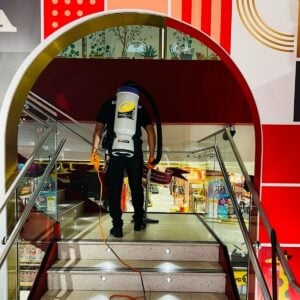
- Stairs: pick up litter, dust and polish rails and ledges, clean glass, vacuum or mop the treads and landings
How Often, and Who Does It
Frequency follows traffic and visibility. The split that matters in retail is what happens while the store’s trading versus what waits until the doors close. Everything below is routine work. The periodic reset that gets behind the fixtures and into the grout is a different scope, and we lay out where the line falls in general cleaning vs deep cleaning.
| ZONE | DURING TRADING HOURS | OVERNIGHT OR BEFORE OPEN |
|---|---|---|
| Entrance and glass | Door glass and handles checked through the day, matting kept clear | Full glass, matting lifted, sidewalk swept |
| Sales floor | Litter, spot spills, quick vitrine touch-ups | Full dust, floors, vacuum, displays |
| Fitting rooms | Reset between customers, mirrors, floor check | Deep clean, lighting, skirting |
| Restrooms | Checked and restocked on a schedule, not on complaint | Full clean and disinfect |
| Stockroom | Kept clear as stock moves | Floors and shelving |
| Facade and awning | Graffiti and stickers off on sight | Periodic pressure washing, early morning before open |
The trading-hours column is a day porter role. One person on site through the day, keeping the glass, the restrooms, and the fitting rooms at standard while the store sells. The overnight column is the crew. Most flagships need both, and the stores that try to cover the day column with sales staff are the ones where the fitting room mirrors are smeared by 2pm. If you’re working out which role you’re buying, we break down the difference in day porter vs janitor.
The Finishes That Punish the Wrong Crew
This is where a cheap contract gets expensive. A generic crew with an all-purpose spray and a rotating pad can do damage to a flagship’s finishes that costs more to fix than years of the cleaning contract.
| FINISH | WHAT GOES WRONG |
|---|---|
| Marble and natural stone | Anything acidic etches it, and the dulling is permanent. It needs a neutral cleaner and the right pad. We cover the day-to-day method in our guide to cleaning marble floors, and what it takes to bring a dulled floor back in our marble restoration guide. |
| Architectural glass and vitrines | Streaks and haze that only show under display lighting, which is the only light that matters here. |
| Brass and metal trim | Abrasives and the wrong chemistry strip the lacquer, then it tarnishes and there’s no going back without refinishing. |
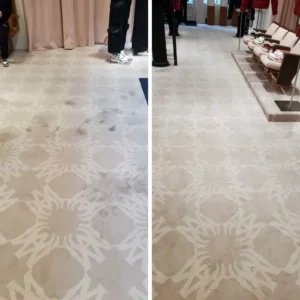
| Carpet and rugs | Traffic lanes and ground-in grit. Wrong extraction leaves residue that attracts more soil. See carpet cleaning. |
| Polished concrete and terrazzo | Loses its finish under the wrong pad or a mop that just moves grit around. Method varies by floor, which our floor cleaning work handles by type. |
If the store’s mid-renovation, that’s a separate job again. Fine construction dust settles into everything and keeps resettling for days, and it needs post-construction cleaning rather than a regular crew with a vacuum.
How We Run Flagship Retail in NYC
A structured cleaning checklist only helps maintain high hygiene standards when compliance is tracked. That’s the whole problem with retail cleaning: the list exists, it’s taped inside the stockroom door, and nobody knows whether the fitting rooms got done on Thursday until a customer says something.
We score the work against a documented walkthrough instead. Zones checked, photos where something’s off, a supervisor signing off before the store opens. Our quality system is built around that, and it’s the reason a flagship looks the same on a Wednesday morning as it does for a Saturday launch. For multi-store portfolios and the landlords who manage the buildings, we run the same approach across managed commercial property, and the wider service sits under our commercial cleaning work.
Commercial Cleaning Services · NYC
Running a Retail Store in Manhattan?
Tell us the store, the finishes, and your trading hours. We’ll put together a scope that covers the sales floor, the fitting rooms, and the sidewalk, with the documentation to prove it ran.
Get An estimate
We will contact you within the hour to start working on your quote.
Your contact information
Sources
- NYC Department of Sanitation, Cleaning Rules for Businesses. nyc.gov
- NYC Department of Sanitation, Sidewalks & Gutters (sidewalk and 18-inch gutter cleaning duty). nyc.gov
- NYC311, Sidewalk Cleaning. portal.311.nyc.gov
- NYC Department of Sanitation, Avoiding Common Business Violations (Administrative Code 16-118, 16-120, 16-123; penalty ranges). nyc.gov