Metal Cleaning, Polishing & Restoration Services NYC
Metal Cleaning & Restoration Company · NYC
We keep architectural and decorative metal looking right across NYC commercial buildings. Elevator cabs, lobby panels, handrails, escalator landings. Stainless, brass, bronze, copper, aluminum and chrome, cleaned, polished, restored and protected on a schedule you set, by our own crew.
In short
Advantage Cleaning cleans, polishes and restores architectural and decorative metal in commercial buildings across New York City. Stainless steel, brass, bronze, copper, aluminum and chrome. Elevator cabs, lobby panels, handrails and escalator landings. We self-perform every part of it, including scratch reduction, corrosion removal and protective coating, so there’s no specialty sub showing up on your property working to their own standard. Product gets matched to the metal and the finish, tested on a small area first, then documented with before and after photos. Our crews are OSHA-trained. We work all five boroughs plus Jersey City and Newark.
What we do
Why Commercial Cleaning Services In NYC Require More Than A Mop & A Schedule
We work metal from a routine wipe-down all the way up to bringing a scratched cab panel back. Stainless steel cleaning and polishing. Brass polishing and restoration, bronze refinishing, copper tarnish removal, aluminum brightening, chrome polishing. Oxidation and corrosion removal, fingerprint and smudge work, scratch reduction and surface refinement, and protective coating so the finish holds instead of going right back to where it was in six weeks.
Metal is the first thing that gives away a building’s age. The elevator doors pick up a hundred hand smudges by noon, the brass rail went brown somewhere around year three and nobody can tell you which month it happened, and the stainless panel by the security desk has swirl marks from a crew that used the wrong pad on it. Tenants don’t file a ticket about any of that. They start calling the building tired.
All of it is our crew. We don’t sub the restoration piece out to a specialty shop the second a panel needs more than a polish, which is what most janitorial companies do. One scope of work, one supervisor, one person to call when something’s off.
Consistency
The same finish on visit four
A written scope per metal and per surface, so a different tech on a different week produces the same result.
Performed by Experts
Metal expert crews
Cleaning, polishing, scratch work, corrosion removal and coating all run through our own crew and our own supervisor.
Proof
Photographed, not promised
Before and after on file for every pass, so you see the work instead of hearing about it from a tenant.
These 5 steps are part of Our Quality Assurance System
Every metal cleaning and restoration job runs on the Advantage Cleaning quality system
Intentional. Deliberate. Documented. Applied to every job, every facility, every visit.
Our ProtocoL
Our commercial metal cleaning and restoration process
The order below is the order we work in, and the reason it’s in this order is that every step limits the damage the next one could do. The exact method changes with the metal, the finish and how far the oxidation or wear has gone. The sequence doesn’t.
Step 1
Assessment
We walk it, identify each metal and its finish, and test a small area first.
Step 2
Surface preparation
pH-appropriate and non-abrasive, selected per metal and per finish.
Step 3
Grain and finish
Worked with the grain, finish matched across adjacent panels.
Step 4
Scratches and oxidation
Scratch reduction and corrosion removal as a separate step.
Step 5
Protection
Protective treatment matched to the metal and the facility use.
Step 6
Quality Inspection
A supervisor, against a fixed checklist, before the crew leaves.
Step 7
Documentation
Photo documentation before and after, on file.
Metal Surfaces
The metal we work on
Every metal below wants a different product, a different pad and a different decision made before anyone touches it. Getting that wrong is what causes most of the damage we get called in to undo.
Stainless steel
Grain direction is the whole job. Polish across the grain on a brushed panel and you’ve left a permanent mark that no amount of product takes back out. The other half of it is finish matching. A single panel restored to a brighter finish than the three next to it looks worse than the tarnish did, so we match across the run, not per piece. Elevator doors, kitchen surfaces, handrails, signage, security desks.
Chrome
Fixtures, trim, hardware. Chrome plate is thin, so the work stays on the plating and never through it.
Brass
Lacquered or unlacquered has to be answered before anyone touches it. Half the ruined brass in NYC lobbies got ruined by a crew putting metal polish on a lacquered rail. Once you burn through that coating, the building is signed up for polishing that rail forever, or stripping it and starting over.
Copper
Tarnish removal, then a decision about whether you want it held bright or allowed to move.
Bronze
Patina is sometimes the point and sometimes the problem, and the two look similar to a crew that hasn’t done it. We ask before we strip anything.
Aluminum
Brightening, oxidation removal, storefront and window frame work. Anodized aluminum gets identified first, because it can’t be polished back the way mill-finish aluminum can.
Facilities
Where this work shows up
Class A office towers, where the lobby and elevator banks carry the building’s reputation. Tourist attractions and museums, with escalator landings and handrails taking guest traffic all day. Multi-tenant commercial properties. Flagship retail in Manhattan. Charter schools, where elevator metal and kitchen surfaces get hit harder than anyone expects. Warehouses and industrial buildings with metal fixtures and guardrails. Healthcare facilities. Our range is 1,000 and up to 500,000 sq ft, single buildings and multi-location portfolios across NYC Metropolitan.
- Elevator doors and cab interiors
- Entry doors and door frames
- Brass plaques and signage
- Metal columns
- Commercial kitchen stainless surfaces
- Stainless steel wall panels
- Reception desks and decorative features
- Bronze fixtures
- Handrails and guardrails
- Escalator landings and surrounds
Metal Cleaning & Restoration Services · NYC
Need Specialized Metal Surface Care for Your Building?
Tell us about your metal care needs. We’ll assess the condition, recommend the right method for cleaning, polishing, and restoration, together with you during a walk-through. You receive a written estimate after the walkthrough. No obligations.
First-hand work
Metal work we’ve done in NYC
Real buildings, real before and after. Not stock photography.
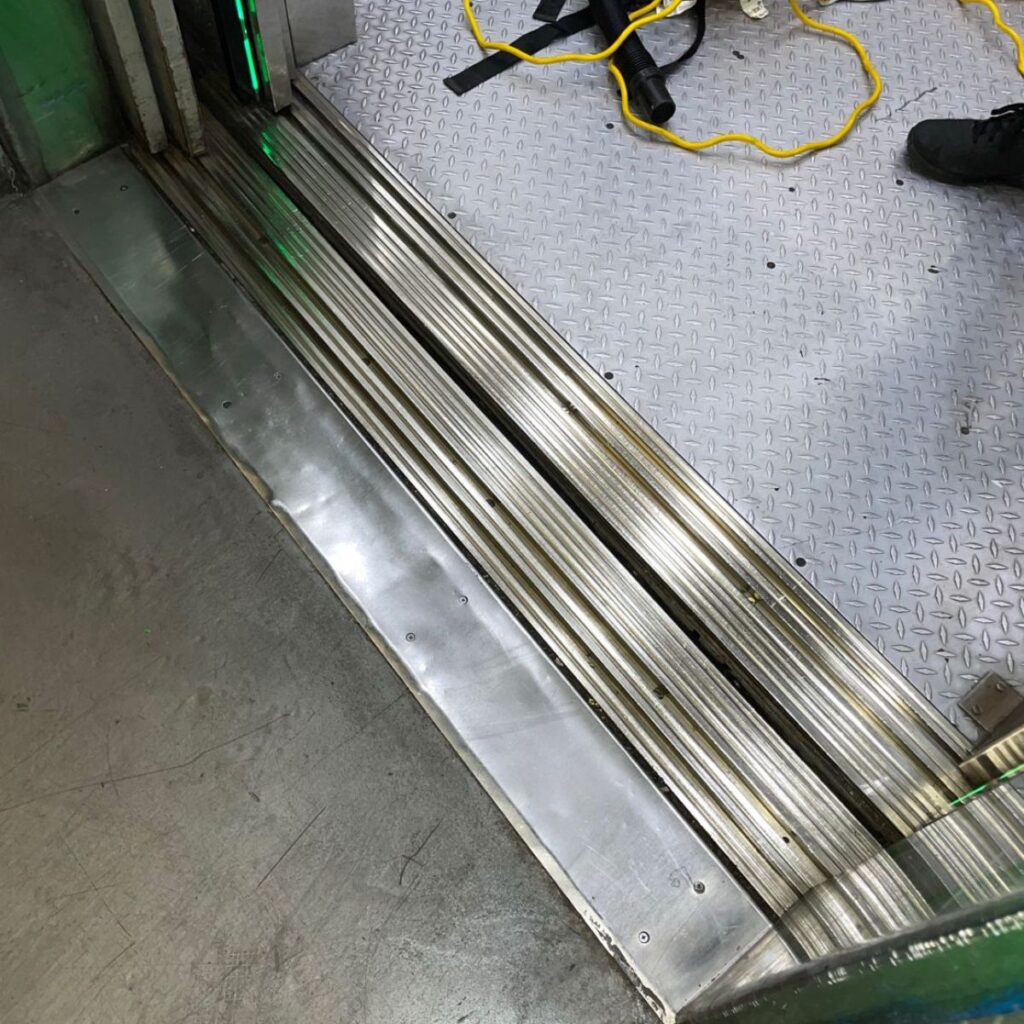
Metal cleaning & Polishing · Bronx
Charter school network, elevator metal
Cab interiors and metal grids, cleaned and restored. School buildings put more hands on an elevator panel per square foot than an office tower does, and it shows fast.
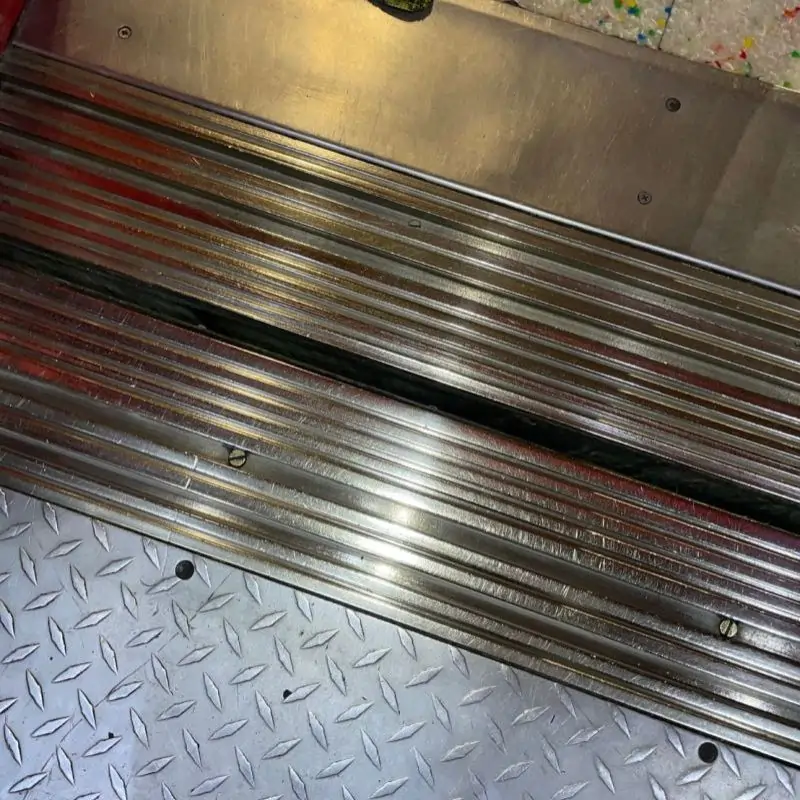
Metal Cleaning & Restoration · Manhattan
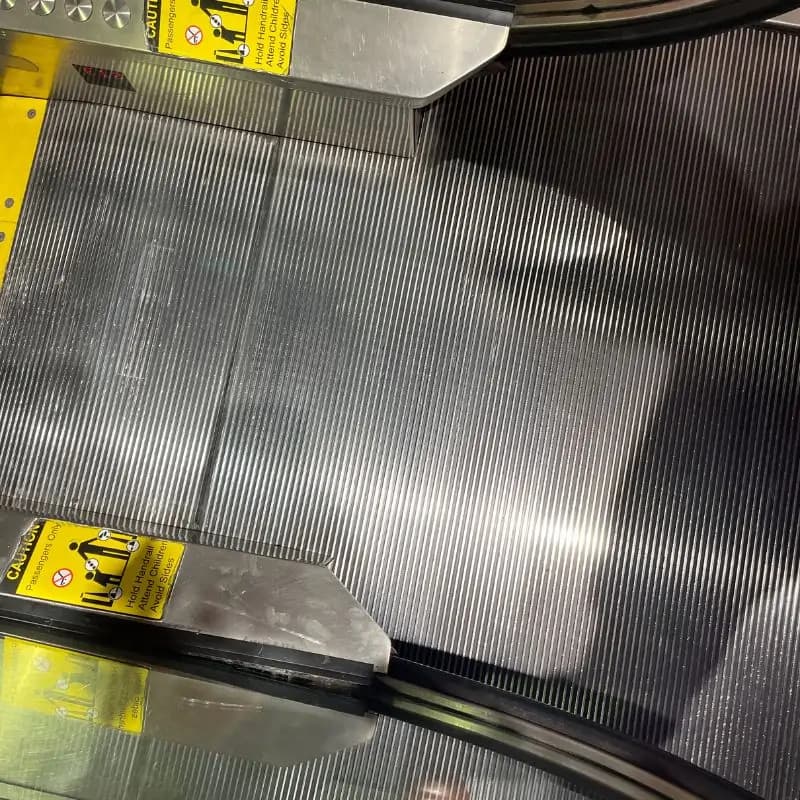
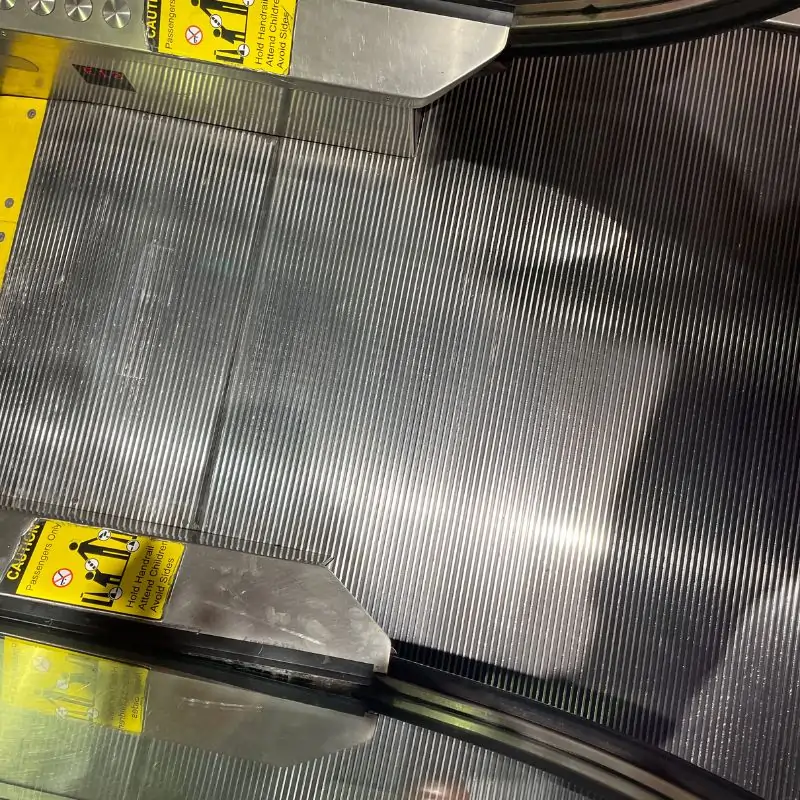
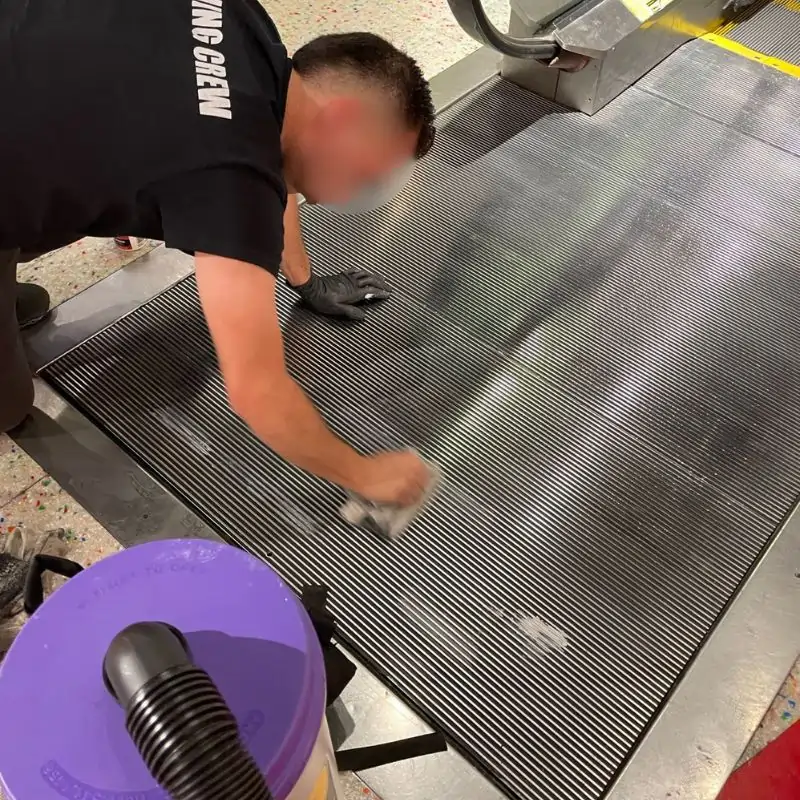
Manhattan tourist attraction, escalator landings
Metal grid work at the landings, with guest traffic across it all day. Before and after documented on every section.
Service coverage
Commercial Cleaning Across All Five Boroughs
Facility operations across every NYC borough, under one contract, one quality standard, and one account manager.
Frequently asked questions
Metal Cleaning & Restoration FAQ
One panel is damaged. Can you match it to the ones next to it, or do we have to do the whole run?
We match it. Matching is the harder half of the work and it’s the part that gets skipped. A single panel brought up brighter than the four beside it reads worse than the damage did, because now the eye has a reference. We restore the damaged panel toward the condition of its neighbors, then blend the adjacent panels only as far as needed to make the transition invisible. On brushed stainless that means matching grain direction and grit, not just shine level.
How do you decide whether something should be restored or replaced?
Deep gouges that go through the material, pitting that’s broken the passive layer on stainless, and decorative brass that’s been polished so many times the detail has gone soft are replacement conversations, not restoration ones. We’d rather say that in the assessment than take the work and hand you back a panel that still looks wrong. If it’s a replacement, we’ll tell you what we’d replace and what can stay, so you’re not re-doing an entire elevator bank because of two doors.
How do you know whether our brass is lacquered before anyone touches it?
We test it in a spot nobody looks at, usually the underside of a rail or behind a hinge. Lacquer and bare brass respond differently, and the answer changes the entire method. This is the single most common way lobby brass gets destroyed in this city: a crew puts metal polish on a lacquered rail, breaks through the coating in patches, and now the brass under it tarnishes unevenly. There’s no polishing your way out of that. It has to be stripped and refinished, and the building pays twice.
Does polishing remove material? Are we thinning our metal every time you come?
Any polish removes a very small amount of surface, which is exactly why we don’t polish on a calendar. Polishing is triggered by the assessment, not by the schedule. The routine work between restorations is cleaning and protection, not abrasive work. That’s also the reason step six exists: the protectant is what lets you go longer between passes, so the total amount of material removed over the life of the metal goes down, not up. Chrome plate is the one to watch, since the plating is thin and there’s nothing underneath it worth looking at.
What protective treatment do you use, and how long does it hold?
It depends on the metal and on what the surface does. A lobby handrail, an elevator cab and a stainless prep counter in a school kitchen get three different products, because one is touched constantly, one is enclosed and one has food on it. We’ll tell you the expected interval for your specific surfaces during the assessment rather than quoting you a number off a product sheet. Any protectant on a high-touch surface has a shorter life than the brochure says, and we’d rather you hear that from us up front.
Can this be done without taking elevators or lobbies out of service during business hours?
Most of it, yes. Cab work usually means one cab out of a bank at a time, off-hours or overnight in a tenanted building. Escalator landing work gets sectioned and coned. We schedule around your building’s hours, not ours. If your building has a freight elevator protocol, a COI requirement or a loading dock window, tell us at the assessment and it goes into the scope rather than becoming a surprise on day one.
What do we get back that we can show our ownership or our tenants?
Before and after photographs of each pass, and a supervisor inspection signed off against the checklist in step seven, by someone other than the tech who did the work. If a tenant complains that the lobby looked better last quarter, you have a dated record instead of a memory.
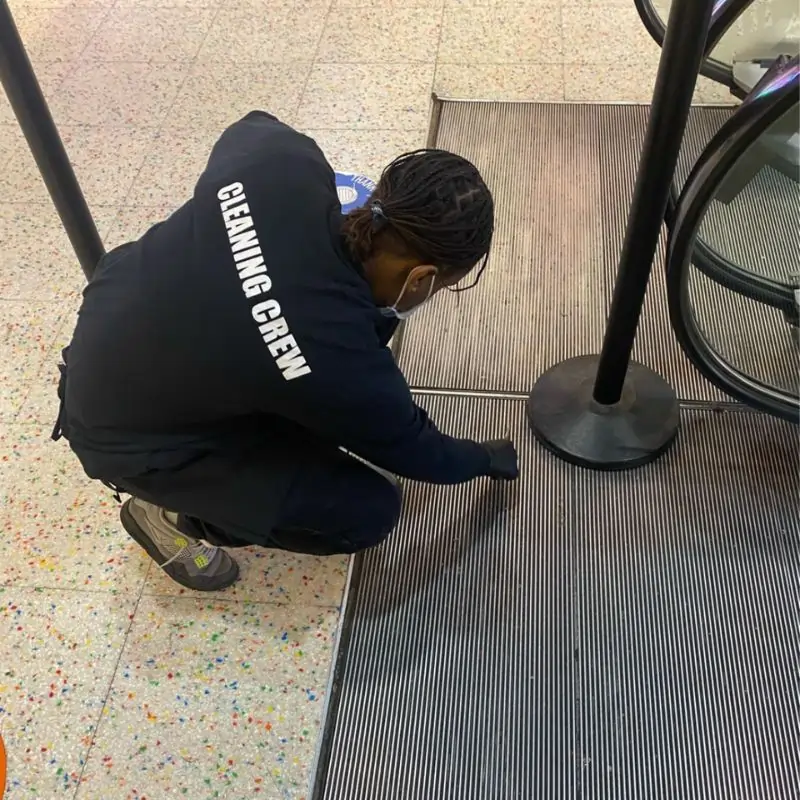
Areas we serve
The same quality system and supervisor verification in every borough and in Northern New Jersey.
The same standard every shift.
We deliver the consistent, high-quality cleaning and building maintenance services your business relies on.