
In Short
Routine cleaning maintains your facility. Deep cleaning restores it. Those are two different jobs — and running only one of them is one of the most common ways facility managers end up with a building that’s cleaned regularly but never quite recovered. Here’s what separates the two programs, and how to know which one your facility is missing.
The question we get more than almost any other from facility managers is some version of this: “We already have a cleaning program. Why do we need deep cleaning on top of it?”
It’s a fair question. And the honest answer is that routine cleaning and deep cleaning are solving two different problems. One maintains the condition of your facility. The other restores it. If you only have one, the other’s work accumulates — quietly, in the places your daily crew isn’t reaching — until the cost of catching up exceeds what prevention would have run.
Here’s how the two programs actually differ, where each one breaks down, and how to know which one your facility needs more of right now.
What General Cleaning Does — and Doesn’t Do
Routine commercial cleaning is daily or weekly maintenance. Trash removal, restroom servicing, surface wiping, mopping, vacuuming. It keeps a facility functional and presentable under normal operating conditions.
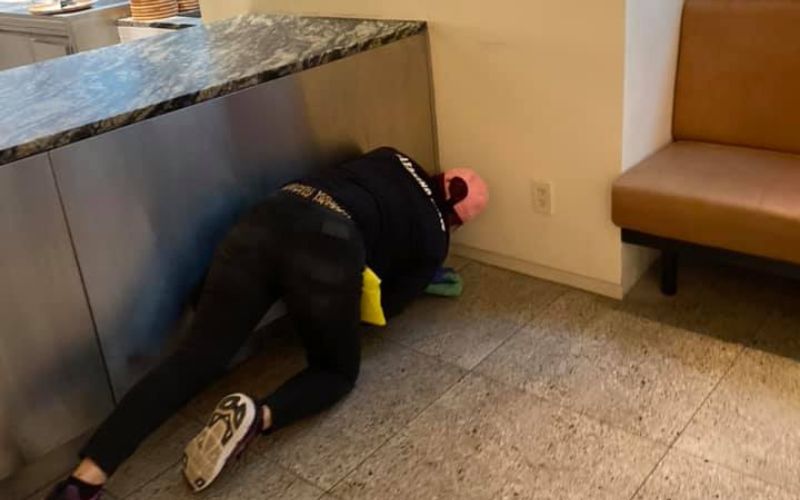
What it doesn’t do is reach the places that don’t need attention every day but accumulate over time. High ledges. Vent covers. Grout lines. Floor edges. Behind and beneath fixtures. Window tracks. Inside corners. These areas aren’t on a daily cleaning route because daily attention isn’t what they need — but they do need attention, on a cycle that routine cleaning doesn’t cover.
When those areas are left out of any cleaning program entirely, the facility starts a slow decline that doesn’t show up immediately. It shows up six months later in a restroom that looks clean at a glance but feels neglected, or a lobby floor that hasn’t responded to routine maintenance in weeks, or a spike in occupant complaints that nobody can point to a specific cause for.
Routine cleaning is essential. It just has a ceiling. Deep cleaning is what happens above that ceiling.
What Deep Cleaning Actually Is
Deep cleaning addresses the surfaces, buildup, and environmental conditions that routine cleaning doesn’t reach on a regular schedule. The specific scope varies by facility, but the principle is consistent: deep cleaning goes behind, beneath, above, inside, and around the spaces that people see and use every day.
In practice, for commercial facilities across NYC, a deep clean typically covers:
- High dusting — ledges, light fixtures, ceiling corners, HVAC diffusers
- Vent and grille cleaning
- Detailed restroom restoration — grout, fixtures, partitions, drains
- Floor edge and baseboard scrubbing
- Behind and beneath furniture and equipment
- Window tracks and frames
- Kitchen and break room equipment surfaces
- Detail cleaning of all hardware, switches, door frames, and push plates
That last category matters more than most cleaning specs acknowledge. High-touch surfaces — the ones that get touched hundreds of times a day but wiped maybe once — are where buildup concentrates fastest. The EPA’s guidance on indoor air quality in commercial buildings consistently identifies surface contamination and dust accumulation as primary contributors to poor indoor air quality. A routine cleaning program that doesn’t reach those surfaces isn’t neutral — it’s allowing conditions to worsen on a schedule.
The Four Ways They Differ
1. Scope
Routine cleaning covers a defined set of tasks on a repeating schedule. Deep cleaning covers everything routine cleaning leaves out, on a less frequent cycle. The scope of a deep clean should be documented before work starts — every area included, every area excluded, whether furniture will be moved, whether high dusting is covered, how results will be inspected. Without that documentation, “deep cleaning” means whatever the provider decides it means on the day.
The commercial cleaning industry has a real problem here. Two providers can submit proposals using identical language and deliver completely different outcomes. The answer is scope in writing, not trust in terminology.
2. Frequency
Routine cleaning happens daily, weekly, or several times a week depending on facility type and traffic. Deep cleaning happens on a longer cycle — monthly, quarterly, semi-annually, or event-driven (before an inspection, after construction, at the start of a school year). The right frequency depends on the facility. A high-traffic NYC office building with heavy daily use needs deep cleaning more often than a low-occupancy warehouse. A charter school needs it before every school year at minimum and ideally mid-year as well.
3. Objective
Routine cleaning maintains appearance and hygiene at the surface level. Deep cleaning restores the underlying condition of the facility — the floors, the grout, the hardware, the surfaces that hold contamination and wear over time. Maintenance and restoration are different jobs. Treating them as one is where deferred costs accumulate.
4. Outcome
After a properly scoped routine cleaning, the facility looks presentable. After a properly executed deep clean, the facility performs better — indoor air quality improves, surfaces that were accumulating contamination are reset, flooring that wasn’t responding to routine maintenance starts holding its finish again. ISSA, the worldwide cleaning industry association, frames this distinction in its cleaning standards guidance: cleaning for appearance and cleaning for health outcomes require different protocols, frequencies, and verification processes. Both matter. Neither substitutes for the other.
Not All Deep Cleaning Programs Deliver the Same Result
This is where facility managers need to be careful.
The answer isn’t labor hours. It’s scope.
We’ve walked buildings in Manhattan and Brooklyn where a “deep clean” had been completed the previous week. The common areas looked fine. The restrooms looked clean. But the vent covers hadn’t been touched, the floor edges had visible buildup, and the high ledges were carrying months of accumulated dust. That dust was going to redistribute through the HVAC system and land back on the surfaces that had just been cleaned. The provider called it a deep clean. It wasn’t.
A real deep cleaning defines — in writing, before work starts:
- What areas are included and excluded
- Whether high dusting is in scope
- Whether vents and grilles are included
- Whether floor edges and baseboards are covered
- Whether furniture will be moved
- Whether detailed restroom restoration (grout, fixtures, drains) is included
- How results will be inspected and documented
Without those answers, you’re comparing proposals that look identical on paper and produce completely different conditions in practice. Scope is the only protection.
Why Deep Cleaning Requires a System, Not Just Effort
The most important areas to deep clean are also the easiest to miss — because they’re not in anyone’s line of sight. High ledges, window tracks, floor edges, inside corners. Inspectors and occupants rarely look there. Which means cleaning crews without explicit scope documentation rarely clean there either.
That’s not a people problem. It’s a systems problem. The best crew in the market will miss the floor edges if the scope doesn’t call them out. The best scope in the market will go unexecuted if there’s no inspection process to verify it.
At Advantage Cleaning, deep cleaning scopes are built on task-level protocols, not general descriptions. Team leads walk the facility after work is complete and verify against the documented scope before sign-off. If something was missed, it gets corrected before we leave. That process is what separates a deep cleaning from a cleaning that goes long.
For facility managers, this matters beyond the immediate project. You’re accountable for the condition of your facility long after the cleaning crew has left the building. The system behind the cleaning is what protects you.
See how our Quality System documents scope, inspections, corrective actions, and verification procedures.
The Cost of Waiting
Deferred deep cleaning has a cost structure most facility managers underestimate — because the consequences develop gradually and don’t announce themselves until they’ve compounded.
Flooring is usually the first place it shows.
Routine cleaning maintains the surface. Deep cleaning preserves the finish underneath. When deep cleaning cycles are skipped, soil embeds in the finish layer, protective coatings deteriorate faster, and the floor stops responding to routine maintenance. Strip-and-wax becomes the next intervention. Ignored long enough, strip-and-wax becomes restoration. Restoration becomes replacement. Replacement is always the most expensive outcome, and it’s the one most directly connected to deferred maintenance cycles.
See our professional floor care services for detail on what structured floor care cycles look like across facility types.
Restrooms reveal the true state of a cleaning program faster than any other space.
Deferred deep cleaning starts as minor grout discoloration and fixture buildup. It compounds into odors that routine cleaning can’t eliminate, staining that requires specialty treatment, and occupant complaints that affect tenant perception. In a multi-tenant NYC office building, restroom condition is one of the first things tenants raise in lease renewal conversations. It’s rarely framed as a cleaning issue. It’s framed as a management issue.
Common areas
Lobbies, corridors, elevators, entrance areas — shape how every person who enters the building perceives it. The perception gap between a maintained space and a restored space is visible. Prospective tenants walking a building for the first time form an opinion in the lobby. That opinion is hard to revise.
Indoor air quality compounds quietly.
Dust accumulation in vents, on high surfaces, and in HVAC systems recirculates through the building continuously. The EPA identifies accumulated particulates as a primary driver of poor indoor air quality in commercial buildings. Deep cleaning that includes vent cleaning and high dusting interrupts that cycle. Skipping it doesn’t just leave the surfaces dirty — it keeps the air quality problem circulating.
When Your Facility Needs Deep Cleaning
The signal is usually in the facility’s condition, not the calendar. Common indicators:
Occupant complaints are increasing without an obvious cause.
Complaints about smell, air quality, or general cleanliness that can’t be traced to a specific incident often indicate that accumulated conditions are surfacing.
Floors aren’t responding to routine maintenance.
If buffing or mopping isn’t producing the result it used to, the finish layer has likely degraded past what routine care can recover.
Dust returns within days of cleaning.
Persistent rapid dust accumulation usually means the source — vents, high surfaces, or embedded floor particulate — hasn’t been addressed.
Restrooms look clean but don’t feel clean.
One of the most consistent indicators that surface-level cleaning is no longer sufficient.
Inspection, audit, or occupancy event approaching.
Most facility managers schedule a deep clean before Joint Commission walkthroughs, APPA audits, lease-up events, or owner walkthroughs. The right time to schedule it is 2–3 weeks before the event, not the week of.
Seasonal reset
Schools use summer breaks. Office buildings use holiday shutdowns. Warehouses use planned maintenance windows. These are the natural deep cleaning cycles — the question is whether the scope matches the opportunity. See our APPA Cleaning Standards guide for how educational facilities define and measure cleaning levels.
Post-construction or renovation
Even minor renovation work leaves behind construction dust that routine cleaning can’t fully address. See our post-construction cleaning services for what that scope involves.
How Deep Cleaning Works Across Facility Types
Every facility type has different priorities. The cleaning work may look similar — the outcomes it’s protecting are not.
| Facility Type | What’s Being Protected | Why Deep Cleaning Matters |
|---|---|---|
| Schools and charter schools | Student health, attendance, parent confidence | Removes accumulated contamination from high-touch surfaces; prepares facilities for new school terms. NYC schools also face DOE facility maintenance mandates that set minimum standards. |
| Office buildings | Tenant experience, lease renewals, professional appearance | Restores common areas and workspaces that influence tenant perception and retention decisions. |
| Multi-tenant properties | Building standards, occupancy rates, asset value | Maintains the condition expected by current and prospective tenants; directly affects leasing conversations. |
| Warehouses and distribution centers | Floor safety, operational efficiency, OSHA compliance | Controls dust accumulation on floors and equipment; supports safer shift-change environments. |
| Healthcare and medical offices | Patient confidence, hygiene standards, regulatory readiness | Addresses detailed cleaning requirements that influence patient experience and inspection outcomes. |
| Educational facilities (general) | Accreditation standards, enrollment confidence | APPA Cleaning Standards provide a measurable framework for defining and verifying cleanliness levels in educational settings. |
Learn more about our school cleaning services and commercial cleaning services for specific facility types.
Routine cleaning and periodic deep cleaning should not be viewed as separate services. Both are part of a broader facility maintenance strategy that also includes inspections, quality control, floor care, and day porter support. For a complete overview of how these services work together, see our Commercial Cleaning Facility Operations Guide.
How This Connects to Your Overall Cleaning Program
Deep cleaning doesn’t replace routine cleaning. It completes it.
A commercial cleaning program built around daily janitorial service — trash, restrooms, surfaces, floors — is maintaining your facility. Add day porter coverage for high-traffic daytime gaps and you’re maintaining it consistently. See our breakdown of day porter vs. janitor for what that distinction means operationally.
Deep cleaning, on the right cycle for your facility type, is what restores the underlying condition that routine maintenance can only sustain. Without it, routine cleaning is fighting a slow losing battle against accumulated buildup. With it, routine cleaning holds longer, assets last longer, and the facility performs at the standard your occupants and stakeholders expect.
For more on how these programs fit together, see our commercial cleaning services NYC program and our broader guide to commercial cleaning as a facility operations function.
Commercial CLEANING SERVICES · NYC
Talk to Us About Your Cleaning Requirements
We serve office buildings, schools, attraction venues, and commercial facilities across NYC. Get an estimate and written scope within 48 hours. No obligation.
Request a Quote
We will contact you within the hour to start working on your quote.
Your contact information
FAQ
Frequently Asked Questions
Worth reading
No post found!