
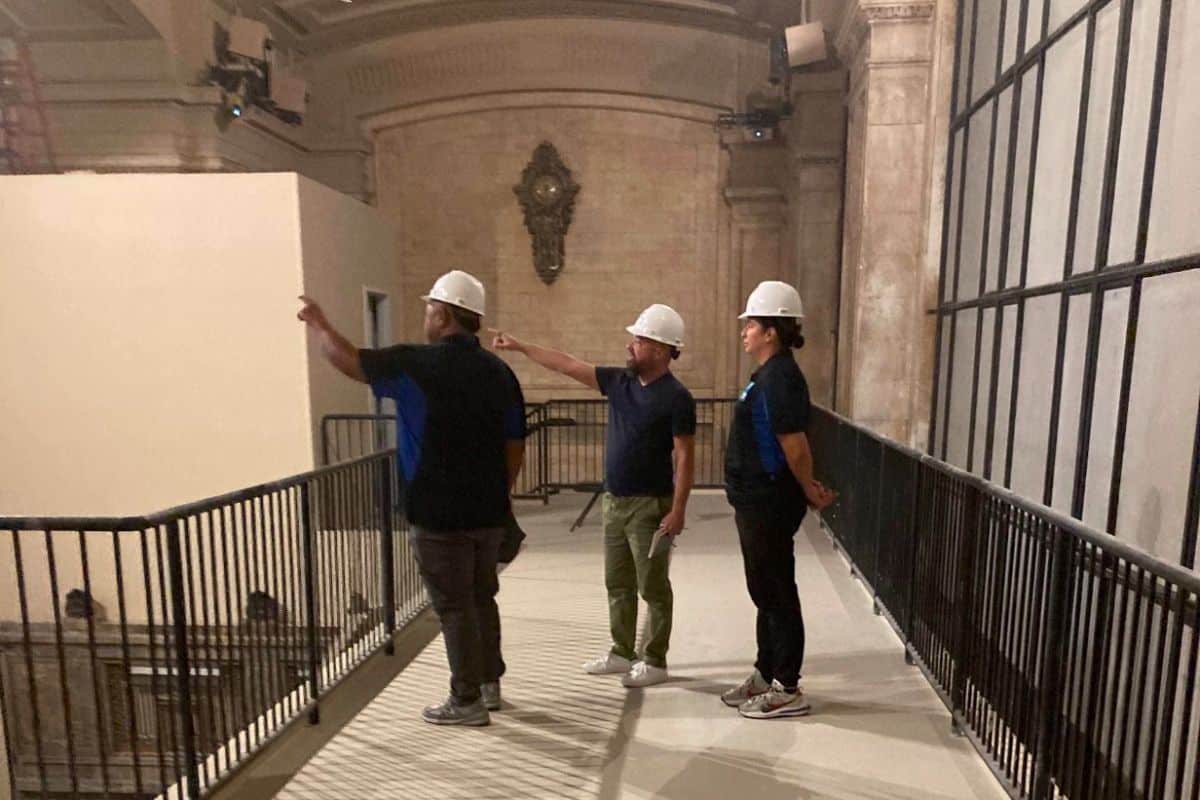
Self-performing looks cheaper until you count the liability. Here is what construction cleanup costs in-house, when outsourcing pays off, and how to set up the engagement so it holds up.
By Advantage Cleaning · Construction and post-construction cleaning across NYC since 2018
IN SHORT
Outsourcing construction cleanup is not automatically the right call, and it is not automatically necessary either. It is a build-vs-buy decision. Self-performing means putting your own people on the work, which means you own the OSHA construction-site liability, the silica exposure, the workers’ comp, and, in NYC, the waste-hauling compliance that comes with it. Outsourcing shifts most of that to a specialist. This guide is for the general contractors, project managers, developers, and owners deciding which way to go. It covers what self-performing costs, when outsourcing pays off, what you are really buying, and how to set up the engagement.
For our construction cleaning scope in NYC, see our post-construction cleaning service.
Every cleaning company will tell you to outsource. We would too, so keep that in mind.
It depends on the project. A small tenant fit-out with a loose schedule is one decision. A 200,000 square foot handover with a hard certificate-of-occupancy date is a different animal. Both put real money and real liability on the table. Most people decide on feel, the week of the walkthrough, when every option is at its most expensive.
What You’re Outsourcing
Construction cleanup is not one pass with a broom. It runs in stages. The rough clean pulls debris, bulk dust, and leftover material once the trades are mostly out. The final clean is the detail work that gets a space ready for inspection and handover. On bigger jobs a punch-list clean sits between the two, after the cosmetic fixes.
The final clean is where most of the labor goes. It usually covers:
- Fine drywall and construction dust off every surface, including high ledges and vents
- Paint, adhesive, and sticker residue off glass, fixtures, and hardware
- Windows, frames, and tracks, inside and out where reachable
- Floors detailed to the finish, whether that is polished concrete, tile, or new carpet
- Restrooms and kitchens cleaned and sanitized for use
- A final detail so the space passes the owner walkthrough
We break the stages down in our guide to the three phases of post-construction cleaning and the room-by-room post-construction cleaning checklist. This guide stays on the decision underneath all of it: run that work yourself, or hand it off.
Self-Perform, or Buy It In
It is the same call you make on any scope you could run yourself or sub out. Put your own labor, equipment, and liability into the cleanup, or hand it to a crew that does nothing else. Neither is wrong on its own. What sinks people is treating it as an afterthought and grabbing whatever is easiest to line up the week of handover.
| IF YOU SELF-PERFORM, YOU OWN… | WHAT THAT MEANS |
|---|---|
| OSHA 1926 compliance | A cleaning crew on an active construction site operates under OSHA’s construction standards, not general-industry office-cleaning ones. A crew that only knows the latter is a gap an inspector will find. |
| Silica exposure | Cleaning up concrete, masonry, and tile dust is a respirable silica exposure. OSHA 29 CFR 1926.1153 then applies to your workers, with all the controls it requires. |
| Waste-hauling liability | In NYC, construction and demolition debris must leave via a BIC-registered carter. Self-hauling, even with your own truck or a sub’s, is illegal dumping, and you keep the manifests for DOB. |
| Crew you hire, train, and carry | Finding cleaners who know construction work, training them, scheduling them against a timeline that shifts daily, and keeping them busy between jobs. A temp who does not know the work shows up as missed scope. |
| Equipment | HEPA vacuums, air scrubbers, and floor machines to buy, maintain, and store, or rent on demand. |
| Injury and comp exposure | Injuries on an active site are your workers’ comp and your liability when it is your crew doing the work. |
The one that catches people: the waste hauling. A GC will assume a sub or an in-house crew can just take the debris to a transfer station. In NYC they cannot, not without a BIC registration, and “my guy took care of it” does not survive a DSNY inspection. The violation, and the missing manifest, land on the project, not on the guy with the truck.
When to Outsource, and When In-House Can Work
No single rule covers it. Read your project against both lists and be straight about which side it lands on.
Outsource when
- The square footage is large or the handover date is hard
- The building is older, with lead or asbestos exposure in play
- The work is silica-heavy: concrete, masonry, tile cutting
- It is a high-rise or an occupied building with real logistics
- You have no crew trained on construction-site standards
- The schedule needs a crew that flexes up and down fast
In-house can work when
- The job is small and the finishes are simple
- The schedule is forgiving, with no hard inspection date
- You already have trained staff and the right equipment
- Compliance exposure is low and the debris volume is small
- You have a BIC-registered disposal path already sorted
What You Are Buying Is Risk Transfer
Outsource to a real construction cleaning company and you are not buying labor by the hour. You are handing off the OSHA 1926 compliance, the silica handling, the BIC-hauler and manifest chain, the workers’ comp, and the crew scaling, to a company that already carries all of it as the cost of being in this business.
So a vendor who cannot hand you a certificate of insurance, cannot name themselves under OSHA 1926, or cannot show you their disposal chain is not taking the risk off you. They are just sitting between you and it. When it surfaces, and on a big enough job it will, the problem is still yours.
What You Get Back
Risk transfer is one reason to outsource. Speed is the other. A crew that does only this work moves faster than trades pulled off their own scope to sweep, so the space clears for inspection sooner. They show up with the equipment the job needs, HEPA vacuums, air scrubbers, floor machines, instead of a rental scramble on handover day. And a space that passes the owner walkthrough on the first try protects your schedule and your name on the next bid.
How to Structure the Engagement
Once you have decided to outsource, the setup is what determines whether it goes smoothly or turns into a dispute. Five things to get in writing before anyone shows up.
Define the scope in writing
Phases, HVAC responsibility (grilles and diffusers to the cleaner, internal ducts usually to the mechanical contractor), the glass standard, and what “done” means. Vague scope is where almost every construction cleaning dispute starts. It is also where callbacks come from: a missed spot found during the owner walkthrough costs more than the clean did, in time and in reputation.
Engage early
Bring them in weeks ahead, not two days before the walkthrough, so they can map their sequence against trade demobilization and elevator windows. Our project manager’s guide covers how early, and why.
Confirm bonded and insured
A bonded contractor, and a certificate of insurance naming your entity as additional insured, the coverage limits your project requires, and workers’ comp. Ask for a sample before the project, not after a problem.
Confirm the disposal chain
That debris leaves via a BIC-registered carter and that you receive waste manifests. This is the piece that protects you in a DOB or DSNY inspection. Our guide to construction waste disposal in NYC covers the rules.
Set the pricing model and reporting
Price tied to the written scope, not a blind number per square foot, and one supervisor who reports to you daily. Pricing with no scope behind it comes back as change orders.
Structuring Is Not the Same as Vetting
A clean engagement only matters if the contractor can do the work on an active NYC site. That is a separate check, and it comes down to a few pointed questions about site safety, documentation, quality control, and sequencing. We lay those out, with what a good answer sounds like, in our project manager’s guide to post-construction cleaning. Run the vetting first. Structure the engagement around whoever passes it.
post-construction CLEANING SERVICES · NYC
Weighing in-house against outsourcing on a NYC project?
Tell us the scope and the handover date. We will give you a scope-based number and the COI and disposal chain that come with it, so you can compare the real cost, not just the hourly rate.
Request a Quote
We will contact you within the hour to start working on your quote.
Your contact information
Sources
- OSHA, Respirable Crystalline Silica, Construction (29 CFR 1926.1153). osha.gov
- OSHA, Safety and Health Regulations for Construction (29 CFR 1926). osha.gov
- NYC DSNY, Construction and Demolition Debris (BIC-registered haulers). nyc.gov
- NYC Business Integrity Commission, License for Waste Removal. nyc-business.nyc.gov
FAQs Outsourcing Clean Up
No post found!