
In Short
Warehouse cleaning is a safety and compliance function, not housekeeping. The hazards it controls, floor debris, dust accumulation, and blocked egress, sit behind some of the most serious incident categories in industrial workplaces. A working program is built by zone and shift, matched to how the facility runs, and documented so you can prove it in an audit. This guide covers the frequency each zone needs, what OSHA and NFPA require, the areas most facilities miss, and where in-house work ends and a professional crew begins.
Warehouse cleaning is a compliance program, not housekeeping
Walk enough warehouses and the cleaning fails for the same reason every time: it gets treated as a chore that happens when there is time, instead of a safety control that runs on a schedule. When operations get busy, cleaning gets pushed. Grit builds in forklift lanes, dust settles on racking and beams, a spill near a dock waits for someone to notice it. None of that is cosmetic. Each one maps to a hazard OSHA inspects for and an incident category that puts people out of work.
The fix is not more effort. It is a schedule built around how the warehouse actually runs, designed to create a cleaning plan for each warehouse department, with cleaning responsibilities assigned to different shifts or departments and frequency that matches the traffic. That is what keeps the floor safe when the operation is running at capacity, and it is what gives employees something to show when an inspector or an insurer walks in.
From the field. We run a floor program at a 120,000 sq ft distribution center in New Jersey: three machine-scrubbing passes a week, with an OSHA 1910.22 record filed per visit. The value is not the shine. It is that when volume doubles for peak season, the floor does not quietly turn into a slip claim, and there is a dated log proving the work was done.
What warehouse cleaning prevents: the numbers
Warehouse cleaning is not cosmetic. The hazards a documented program controls, floor debris, dust accumulation, blocked egress, sit behind some of the most serious incident categories in industrial workplaces.
281 incidents · 119 deaths
Combustible dust fires and explosions in U.S. industry, 1980 to 2005, plus 718 injuries. Housekeeping is the primary control; a dust layer as thin as 1/32 inch can ignite.
844 deaths
Falls, slips, and trips were the second-leading cause of U.S. workplace fatalities in 2024, most of them preventable with floor and egress housekeeping.
~2x the average
Warehousing runs an injury rate near double the 2.3-per-100-worker all-industry rate. Debris, wet floors, and clutter drive a large share of it.
OSHA 1910.22
Dust accumulation, wet floors, and blocked aisles are cited as housekeeping violations under the Walking-Working Surfaces standard.
Every one of these is a housekeeping-controllable hazard. A zone-based cleaning program with dated logs is both the prevention and the documentation an inspector or insurer asks for after the fact.
How often should a warehouse be cleaned?
There is no single answer, because a receiving dock and a storage aisle carry different risk and different traffic. Frequency is set by zone, then adjusted for how hard the operation runs. The schedule below is the baseline for a working commercial warehouse. High-throughput and regulated facilities run heavier.
| Zone or task | Baseline frequency | What raises it |
|---|---|---|
| Forklift lanes & high-traffic aisles | Daily, each shift in high-throughput | Spill rate, traffic volume |
| Loading docks & receiving | Daily | Pest risk, weather tracking |
| Open warehouse floor | Daily sweep, weekly machine scrub | Dust, coating wear |
| Restrooms & break rooms | Twice daily at 50+ workers | Headcount, shift changes |
| Racking & shelving | Weekly dusting | Product sensitivity |
| Overhead: beams, rafters, HVAC, lighting | Monthly to quarterly | Combustible dust rating |
| Battery-charging areas | Weekly, with ventilation check | Off-gassing |
| Dock seals, drains, exterior | Monthly | Season |
Cold storage, food, and pharmaceutical warehouses run their own protocols, higher frequency and documented to GMP. Treat the table as the general-warehouse baseline, not a ceiling.
The hard to reach areas and zones most warehouses miss
When we take over a facility, the daily sweep is rarely where the gaps are. It is the areas nobody walks during a normal shift, and they are the same ones almost every time.
- Overhead. Dust settles on beams, joists, light fixtures, and HVAC ductwork where no one looks. For a facility handling wood, metal, grain, plastic, or food powders, that accumulation is the combustible-dust hazard, and housekeeping is the primary control the CSB and NFPA 652 point to.
- Racking. Dust on upper racks resettles onto product and floors every time a forklift passes or the HVAC cycles, so high shelves should be cleaned first so debris does not fall onto lower surfaces after cleaning. Use extension poles to clean high shelves and other hard to reach areas. Cleaning racking also requires special attention because it is often when a crew spots a bent upright or a compromised beam before it fails.
- Dock seals and drains. These surface during cleaning, not during a walkthrough. A cracked dock seal lets in weather and pests; a blocked drain is a slip and a code issue. Emergency exits and fire protection equipment must remain accessible and clear of obstructions to avoid safety hazards.
- Battery-charging areas. They off-gas and collect residue, and they need ventilation kept clear, which routine sweeping skips.
The crew is your early-warning system.
The people cleaning your racking every week are the closest thing you have to continuous inspection of those surfaces. Ours flag damaged uprights, hydraulic leaks under equipment, and dock seals starting to go, because they are the only ones looking at those spots up close on a schedule. A cleaning log that also captures reported damage turns housekeeping into preventive maintenance.
Warehouse floor cleaning, degreasing, and restoration
The floor is the hazard surface and the biggest maintenance cost in the building. Grit and debris cut traction for people and forklifts, wear down tires, and grind through sealer and epoxy over time. It is also three different jobs, and most programs only do the first.
Routine scrubbing: the double-scrub method
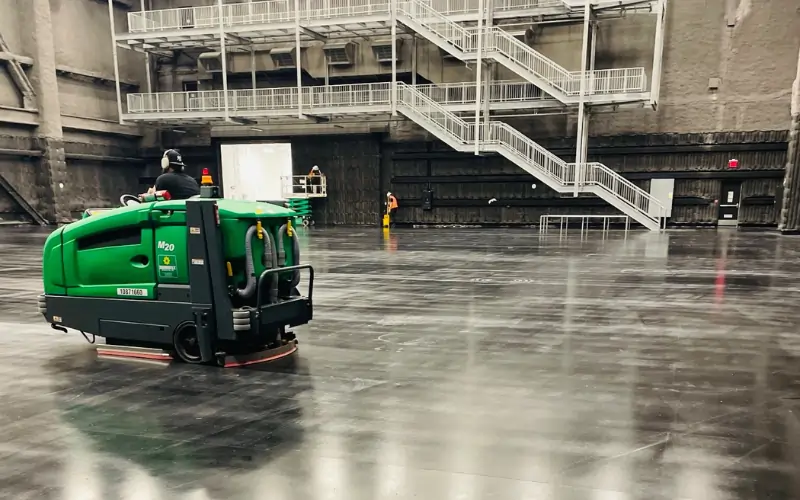
The most common floor mistake we walk into is a warehouse relying on sweeping alone. Scrubber driers are effective for cleaning industrial flooring because they remove embedded soil more efficiently than sweeping alone. Daily sweeping, or a ride-on sweeper in large open areas, clears loose debris, and vacuum sweepers reduce dust during the cleaning process, but it does not touch the embedded soil that makes a floor slick. That needs machine scrubbing. On a heavily soiled warehouse floor the method that works is a double scrub: one pass with the squeegee up to lay down solution and break the soil loose, then a second pass with the squeegee down to recover the dirty water. A ride-on scrubber handles the open floor; industrial ride-on scrubber dryers are used for large floor areas, while a walk-behind gets tight aisles and around racking. Frequency follows traffic, weekly or more on high-throughput floors, monthly on lighter ones. Combination machines are versatile cleaning equipment that can dry sweep and clean areas over 10,000 square meters efficiently, helping productivity and saving time in large spaces.
Degreasing, oil, and tire marks
Forklift and equipment traffic leaves oil, hydraulic fluid, and black tire marks, so immediate spot cleaning helps prevent spills from spreading across warehouse floors. Those are traction hazards, not cosmetic ones. They need an industrial degreaser matched to the floor, and for set-in marks scrubber driers can remove grease and tire marks when matched with the right pad and chemistry. On coated floors the degreaser has to be compatible with the coating, because an aggressive product strips the finish you are trying to protect; that matters on epoxy coated floors, which need compatible degreasers and the right equipment.
Restoration and resurfacing
A floor that has been neglected or run hard reaches a point where cleaning will not bring it back, and the decision becomes restore or replace. Restoration is far cheaper. Worn epoxy can be re-coated; cement screed, the most common warehouse floor type, and bare concrete need restoration choices matched to their condition, with cracks and control joints filled and surfaces densified and polished to cut dusting and restore a sealed surface. The call comes down to how far the surface has degraded and what is driving the wear. An honest assessment, restore what is recoverable and flag what is not, is worth more than a blanket promise to make it look new.
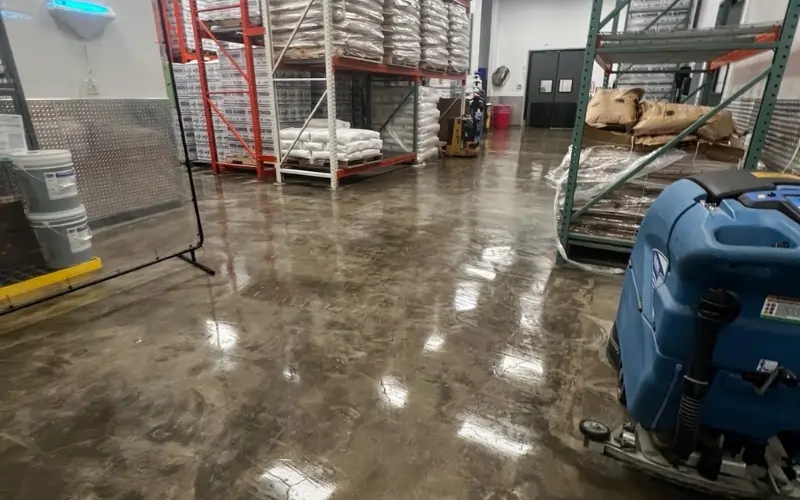
Restore beats replace, usually. On the New Jersey distribution floor we maintain, the concrete was densified and sealed rather than torn out. That is the difference between a scheduled maintenance line item and a capital project, and it is the first thing worth checking before anyone quotes a replacement.
Underneath all three, OSHA’s Walking-Working Surfaces standard requires floors kept clean, dry, and free of hazards, which in a warehouse means traction, not appearance, while maintaining cleanliness over time supports long-term worker safety.
Cleaning changes by warehouse type
Most warehouses clean the same way. A dry-goods DC, a light-industrial facility, and a standard distribution center run essentially the same program. Four types are genuinely different, and the difference is worth knowing before you scope.
Cold storage
Everything fights condensation and ice. Cleaning chemistry has to work at temperature, since many standard products do not, moisture has to be managed so you are not creating a slip or ice hazard, and proper ventilation should be maintained when chemical agents or strong solvents are used. Scheduling also works around temperature zones that cannot be brought up to ambient.
Food and pharmaceutical (GMP)
These run to a documented sanitation standard, not just a frequency. FDA Good Manufacturing Practice, 21 CFR 117 for food and 211 for pharma, requires clean storage, pest control, product separated from chemicals, and records for all of it. Disinfectants should be used according to their labels so they effectively kill bacteria and viruses and support hygiene requirements. The cleaning is not exotic; the documentation and chemical control are the difference.
Combustible-dust facilities
Anywhere handling wood, metal, grain, plastics, or food powders, housekeeping becomes fire control: overhead and racking cleaning to keep dust below threshold, done in a way that does not raise a dust cloud, under NFPA 652. This is the one type where the cleaning method itself carries a safety consequence.
E-commerce and fulfillment.
The soil profile is different. High packaging-waste volume, cardboard, film, and dunnage, plus conveyor surrounds and pick-and-pack density that keeps every zone active. Frequency is driven by throughput and the waste stream more than by square footage.
If your facility is one of these four, the program has to reflect it. A general warehouse schedule dropped onto a cold-storage or food-grade operation misses the exact things that matter, and an active warehouse space also benefits from a clean-as-you-go policy between scheduled tasks to support the business.
What OSHA and NFPA actually require
Warehouse cleaning sits inside a real regulatory framework. The standards that apply:
1. OSHA safety rules and workplace cleanliness
OSHA requires employers to keep workplaces clean enough to prevent slipping, tripping, dust accumulation, and blocked exits. In a warehouse, that means spills must be cleaned promptly, aisles must stay clear, and waste cannot pile up in ways that create hazards. This is essential for operations to run safely, and cleaning must comply with OSHA regulations and, where applicable, New York State health guidelines.
2. Hazard communication and chemical labeling
If your team uses cleaning chemicals, OSHA’s Hazard Communication Standard applies. Workers must have access to Safety Data Sheets (SDS), containers must be labeled properly, and staff must know how to handle products without exposing themselves or others to risk.
3. Walking-working surfaces
OSHA also regulates walking-working surfaces. Floors should be maintained in as clean and dry a condition as possible. That matters in loading zones, picking aisles, battery charging areas, and near entrances where water, oil, or debris can build up fast.
4. Safe use of disinfectants and sanitizers
If disinfectants or sanitizers are part of the cleaning program, they must be used correctly. Surfaces should be cleaned with detergent before disinfecting so the product works properly. In New York, disinfectants should be EPA-approved and registered with the DEC. Proper PPE such as goggles and gloves should be worn when handling chemicals, and staff training on cleaning procedures and chemical handling is crucial for safety. Dwell time, dilution, ventilation, and surface compatibility all matter, and following label directions helps facilities meet industry standards.
5. Documentation and consistency
Cleaning is easier to manage when procedures are documented. Checklists, schedules, inspection logs, and task assignments help make sure standards are followed consistently across shifts. That becomes especially important in larger facilities where multiple teams or vendors share responsibility.
Food, beverage, supplement, and pharmaceutical warehouses add FDA Good Manufacturing Practice requirements under 21 CFR 117 or 211: documented clean storage, pest control, and separation of product from chemicals.
The cleaning log is your audit defence
Regulators do not just want clean aisles. They want proof. A dated, zone-specific log showing completed tasks, the chemicals used, and any hazards reported is what turns cleaning into evidence. Facilities that keep cleaning records as seriously as maintenance records do better in unannounced inspections and insurance reviews, because they can produce the paper trail on demand instead of assembling one under pressure. Keep the SDS binder current, log by zone and shift, and capture reported damage in the same record.
In-house or professional cleaning service? Where the line sits
Most well-run warehouses use both. Your internal team handles the daily and weekly work: spills, trash, restrooms, forklift-lane sweeping, the housekeeping that has to happen every shift. What goes to a professional crew is the work that needs commercial equipment, surface-specific knowledge, or a compliance record: machine floor scrubbing, overhead and combustible-dust cleaning, coated-floor maintenance, and documented programs that stand up in an audit.
The test is simple. If the task needs a ride-on scrubber, a lift for overhead work, or a record an inspector will ask to see, it is usually worth outsourcing. If it is daily upkeep, keep it in-house. For the scoped, documented version of that second category, that is what our warehouse cleaning services cover.
Warehouse CLEANING SERVICES · NYC
Request a Warehouse Facility Assessment
A facility walkthrough to scope the floor program, high-dust requirements, and compliance documentation your operation needs. Written program and pricing within 48 hours for NYC and Northern NJ facilities. No obligation.
Request a Quote
We will contact you within the hour to start working on your quote.
Your contact information
FAQ
How to clean an industrial warehouse
Worth reading
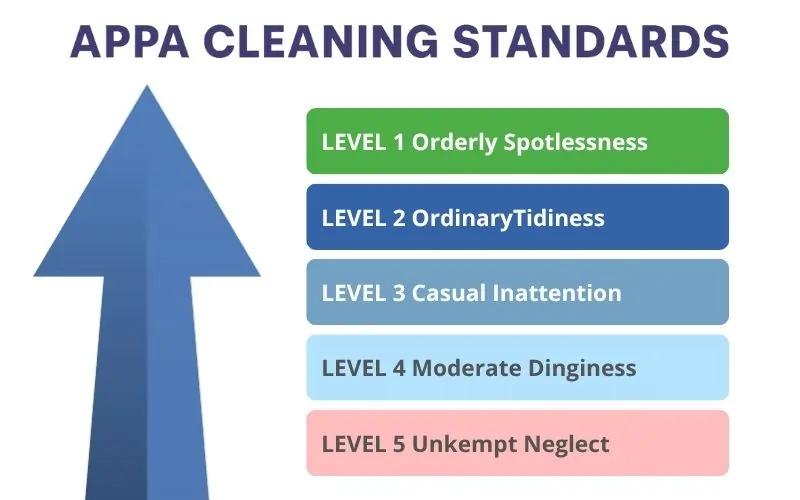
APPA Cleaning Standards: The NYC Facility Manager’s Guide to Cleaning Standards
In Short The five levels of clean, which one to aim for, what it costs…

What Is “Green Cleaning”? Detailed guide for NYC Facility Managers

When Should a Commercial Facility Be Disinfected? Pro Guide
Quick Answer Disinfect high-touch surfaces daily in high-occupancy facilities, and immediately after any confirmed illness,…