Classroom cleaning is the daily and deep cleaning, disinfection, and dust and floor care that keeps a room healthy and safe for students to learn in. Done right, it slows how fast illness moves through a class, keeps the air clearer for kids with asthma, and protects the desks and floors the school already paid for.
This is a guide to how that work actually gets done. If you’re looking to hire a crew, our school cleaning services in NYC page is the place for that. Everything below is the how and the why.
Kids spend most of the school day in one room. They share desks, chairs, and the same air, and that’s where germs spread, dust settles, and a weak cleaning routine turns into sick days. In a NYC school the classroom also sits under more rules than most people expect, from what you’re allowed to clean it with to how you deal with old paint on the walls.
Why a classroom isn’t an office
An office desk belongs to one adult who mostly keeps to it. A classroom desk gets used by a rotating group of kids, touched all day, and handed to the next class an hour later. Add art supplies, snacks, backpacks on the floor, and 25 pairs of hands, and you get a room that needs more than a wipe-down after the last bell.
When a class shares one room, one sick kid on Monday can be five by Friday. Dust and allergens build up in carpet and on surfaces, and they hit the asthmatic kids first.
Then there’s a concern most offices never have to think about. The paint.
The rules that bind a NYC classroom, including trash cans
Green products and microfiber cloths, because you’re cleaning around kids
The same law that covers school restrooms covers classroom surfaces and floors. Under the state’s green cleaning law, every public and charter elementary and secondary school has to use cleaning and maintenance products from the approved list kept by the state Office of General Services, the OGS. Floors are the single biggest surface in a classroom, so the floor cleaner, the general-purpose cleaner, and the disinfectant all have to be on that list or meet the same standard.
We cover how this works for facility managers in our guide to NYC green cleaning regulation. The short version: whatever ends up on a kindergarten desk has to be a product the state cleared for use around children.
Old paint changes how you clean
This is the classroom rule people miss. In NYC, classrooms serving first grade and under in buildings built before 1985 get inspected for peeling paint three times a year, and custodian staff record each check on a paint-condition form. If peeling paint tests positive for lead, it’s abated, and an inspector takes dust wipes to confirm the room is safe before kids come back. You can read the city’s protocol on the NYC schools lead-based paint page.
For a cleaning crew, the rule is short: don’t disturb old paint. A crew that sands or dry-scrapes a chipped windowsill to clean it up just made a lead-dust hazard where there wasn’t one.
So report peeling paint, clean with wet methods, and leave the scraping to certified abatement. Federal lead-dust rules for child-occupied buildings built before 1978 tightened again, with full compliance required as of January 2026. This is not the year to get loose with a putty knife.
Dust and air quality are part of the job
Classroom cleaning isn’t only about what you can see. Dust carries allergens, and in a room full of kids, air quality shows up as attendance. Good floor care is most of the fix: high-performance vacuums with real filtration, dust-mopping, microfiber cloths as the preferred option for dusting because they remove dust and germs more effectively than standard cloths, and walk-off mats at the door that catch dirt before it ever reaches the carpet. The state’s green cleaning program leans on the same tools, because floor care is where a school controls its indoor air the most.
Clean classrooms are pest control
Here’s a connection most vendors don’t make. New York requires schools to use a least-toxic pest management approach and treat pesticides as a last resort. When a school does apply a pesticide, New York’s school pesticide rules require an annual notice to parents and staff, a 48-hour advance-notice registry, and written summaries three times a year, and a separate law bans pesticides on playgrounds and athletic fields.
The prevention side of that is cleaning.
Crumbs, spilled juice, and food left in desks are what bring roaches and mice. A classroom that gets its snack zone and trash handled every day gives pests nothing to come back for, and that keeps the school off the pesticide path in the first place. Clean rooms lower the chemical load a building takes on, not just the crumbs.
The DOE custodial bar
On top of all that, the DOE holds its own buildings to a custodial standard worth matching: nightly disinfection of high-touch surfaces, a 30-day supply of soap, paper towels, gloves, and EPA-registered disinfectant on hand, and products used per label. In a classroom the high-touch list means desks, chairs, door hardware, light switches, and the shared supplies every kid handles. Proper handwashing also depends on access to a sink, with hand sanitizer as a backup when soap and water are unavailable, especially after bathroom use. The DOE facilities guidance spells it out.
How to perform regular cleaning in a classroom the right way
The Cleaning Process sets the floor: cleaning comes before disinfecting because it removes dirt and organic matter that protects germs. A real daily and deep routine in a NYC classroom looks like this:
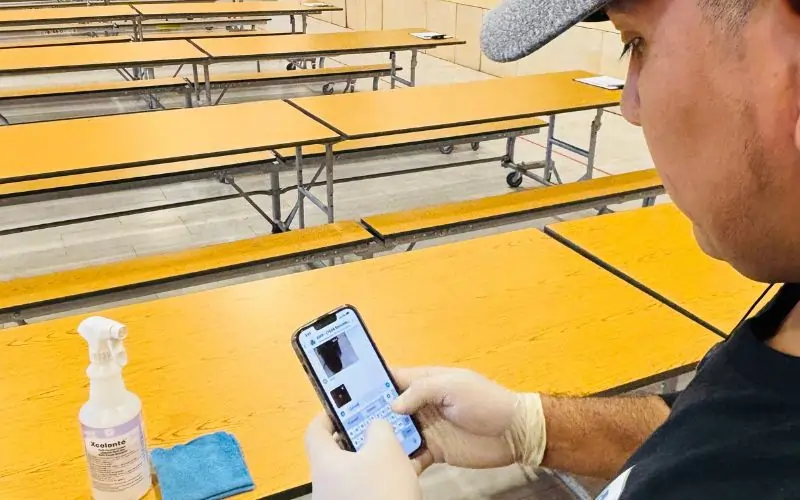
- Surfaces and high-touch points, every day. Desks, chairs, shared tables, door handles, light switches, pencil sharpeners, and shared supplies wiped and disinfected, with the product left wet long enough to actually work; regular cleaning helps maintain a clean classroom and keeps the environment more hygienic. Dwell time is where crews cut corners.
- Floors and dust. Vacuum carpet with a high-filtration machine, dust-mop and damp-mop hard floors, and don’t just move the grit to the edges of the room; routine dusting should also catch chalk dust on ledges, boards, and nearby surfaces.
- Snack and food zones. Crumbs and spills cleaned daily, and crews should scrub sticky spots when needed, not just wipe visible messes. Food left overnight is a pest invitation.
- Leave the paint alone. Report peeling or chipped paint. Don’t scrape it.
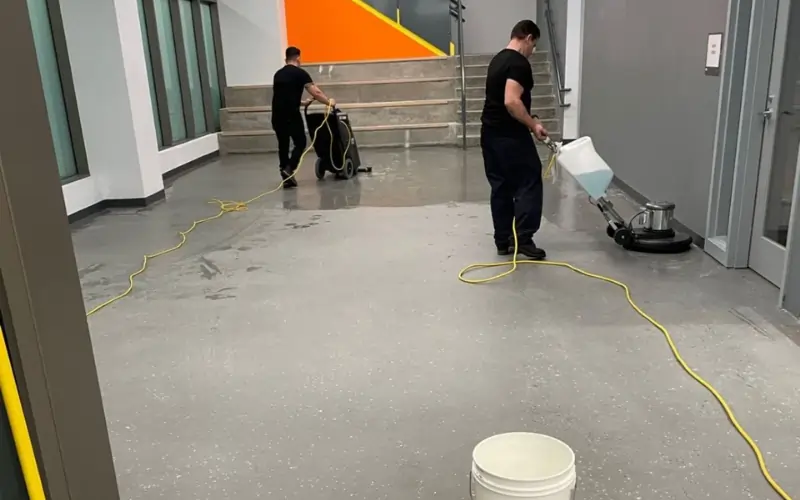
- Deep cleaning on breaks. Remove unnecessary items and broken supplies first, then refinish or strip-and-wax hard floors, deep-clean carpet, wipe walls and vents, and reset the room over the summer.
Teachers can involve students in light tidy-up tasks to build responsibility and teamwork, while custodial cleaning stays with staff.
Take a K-2 room with carpet, a reading corner, and a snack table. Skip the vacuuming for a week and it doesn’t just look tired. A lint roller is also a quick way to pick up glitter after art activities. The kids with asthma feel it first, and the crumbs under the reading rug are what the custodian finds ants around on Monday morning. Nobody cleaned wrong exactly. The routine was just too thin for how the room actually gets used.
How we keep it documented
At Advantage we run every classroom on a mobile-guided task list, so the crew works the same sequence every night and nothing gets skipped and called done. A supervisor signs off before the crew leaves. The products match the OGS-approved list, and the records are ready when NYSED, DSNY, or PESH asks. You can see how the whole program fits together on our school cleaning services page.
When a principal or a parent asks whether a room is clean and safe, that’s the difference between a shrug and a record.
Re-considering your school janitorial contract?
If you’re reviewing your custodial or janitorial scope, put the classroom routine in writing to help prepare the room for routine use and flu season, and ask the vendor two things: which approved products they’ll use, and how they handle a room with peeling paint. A stronger written routine helps protect student health and safety and maintain a healthy environment. The answers tell you fast whether they know how a NYC school actually works.
Request a Quote
We will contact you within the hour to start working on your quote.
Your contact information
Frequently asked questions
Sources
- New York green cleaning law (Education Law 409-i; State Finance Law 163-b), NYS Office of General Services Green Cleaning Program. https://ogs.ny.gov/green-cleaning
- NYC classroom lead-based paint inspection program (buildings built before 1985 serving grade 1 and under). NYC Public Schools. https://www.schools.nyc.gov/school-life/space-and-facilities/space-and-facilities-reports/lead-based-paint
- School pest management and pesticide notification (Education Law 409-h; Education Law 409-k; Commissioner’s Regulations Part 155.4). NYS Education Department. https://www.nysed.gov/facilities-planning/school-pesticide-neighbor-notification-law-information
- OSHA sanitation standard (29 CFR 1910.141), enforced for New York public schools by the NYS Department of Labor PESH Bureau. https://www.osha.gov/laws-regs/regulations/standardnumber/1910/1910.141
- NYC school custodial standards (supply minimums, disinfection protocols). NYC Public Schools Facilities, InfoHub. https://infohub.nyced.org/in-our-schools/operations/building-resources-for-schools/facilities
Worth reading
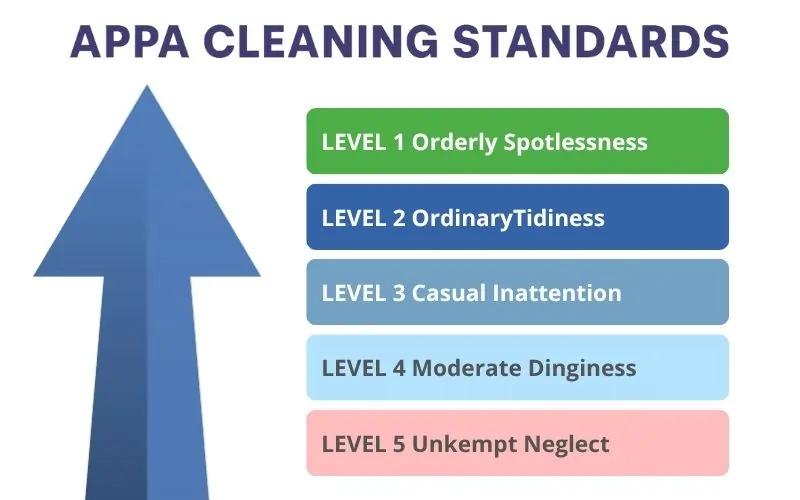
APPA Cleaning Standards: The NYC Facility Manager’s Guide to Cleaning Standards
In Short The five levels of clean, which one to aim for, what it costs…

School Restroom Cleaning in NYC: Guide for Safety & Compliance
In a NYC school, the restroom is usually where you find out how good the…
School Reopening Checklist: The Summer Reset Guide
In Short Summer isn’t a cleaning season for facility directors but more like a compressed…