
In Short
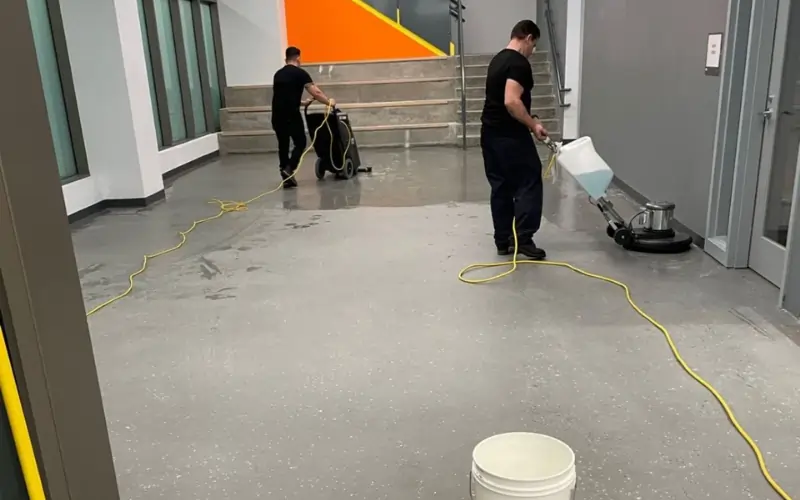
Summer isn’t a cleaning season for facility directors but more like a compressed construction window. Renovations, floor restoration, post-construction cleaning, deep cleaning, and classroom resets all have to happen in sequence, across a building that’s finally empty, before staff return in August and students arrive in September. This guide covers how to sequence that work, what to prioritize when budget runs short, and what “ready” actually means before the first person walks back in.
The Facility Director Is the General Contractor in Summer
For ten months of the year, the facility director’s job is maintaining standards while the building is occupied. Summer changes the job title.
With students out, the building becomes a project site. Renovation contractors are finishing work. Floor crews are stripping and waxing hallways. Deep cleaning crews are working through classrooms. Someone is coordinating all of it, managing the sequencing and the work so a floor crew isn’t stripping a hallway while a renovation contractor is still generating dust two rooms away, making sure post-construction cleaning happens before the deep clean, making sure the deep clean happens before furniture goes back.
That coordination function is the facility director’s summer job. And it’s the part that most summer planning checklists don’t address.
Public, Charter, and Private Schools Face Different Summer Constraints
The summer reset looks different depending on the type of school. Budget, procurement, timeline, and the stakes attached to facility condition vary significantly and a plan that works for a well-resourced charter or private school doesn’t translate to a smaller private or public school running on a compressed timeline with a three-person facilities team.
Public Schools
Public school facility directors operate within district procurement requirements, capital planning schedules, and budget cycles that are largely set before summer begins. Flexibility is limited. The work that gets done in summer is often the work that was approved and contracted months earlier. This means the planning window is actually winter and spring, not June.
For NYC public schools, facility maintenance requirements from the DOE set minimum standards that aren’t optional. See our guide to NYC school facility maintenance mandates for what those require and how summer planning intersects with compliance.
Charter Schools
Charter schools typically have more operational flexibility than public schools and more resources than smaller schools. For some charter schools the facilities team is often small— in some Bronx and Brooklyn charters we work with, the facility director is managing summer projects while also handling the operational responsibilities that don’t stop because school is out.
For charter schools, the enrollment pressure is real. Parents evaluating schools in August are walking buildings that need to look like the school takes its environment seriously. A charter school that opens in September with dull floors, scuffed hallways, and restrooms that haven’t been deep cleaned since April is making a statement about its management, whether it means to or not.
Private Schools
Private schools typically have more budget flexibility and higher baseline expectations from families paying tuition. The facility is part of the product. Summer is when the gap between the school’s stated standards and actual building condition either closes or widens. For private school facility directors, the summer reset isn’t about meeting minimum standards, it’s about maintaining the facility condition that justifies the institutional reputation.
Sequence Is Everything
This is the piece most summer planning checklists get wrong. The work has to happen in a specific order or it creates its own problems.
Wrong sequence
Deep clean classrooms → renovation contractor finishes work → construction dust settles on everything you just cleaned → deep clean again.
Right sequence:
1. Renovation and construction work first.
Nothing else starts in affected areas until contractors are done and out. Construction dust migrates further than anyone expects. A classroom renovation can leave particulate on surfaces two corridors away. If renovation work is still running while cleaning crews are working in adjacent spaces, the cleaning work is wasted.
2. Post-construction cleaning before anything else in renovated areas.
Once contractors leave, the building isn’t ready for deep cleaning before post-construction cleaning has been completed. That means construction dust removal, debris cleanup, detailed surface cleaning, and window work before a standard cleaning crew touches the space. Sending a janitorial crew into a post-renovation space before post-construction cleaning is done produces a building that looks clean and still has construction particulate in the HVAC vents and embedded in the floor finish.
See our guide to the 3 phases of post-construction cleaning and our post-construction cleaning checklist for what that scope involves.
3. Deep cleaning after post-construction, before floor work.
Classrooms, restrooms, cafeterias, gymnasiums, administrative spaces. High dusting first, then ledges, light fixtures, ceiling corners, HVAC diffusers. Once completed the floor work begins, because high dusting redistributes particulate downward. Sequence within the deep clean matters too.
For what deep cleaning covers vs routine cleaning, see our general cleaning vs deep cleaning guide.
4. Floor restoration after deep cleaning is complete.
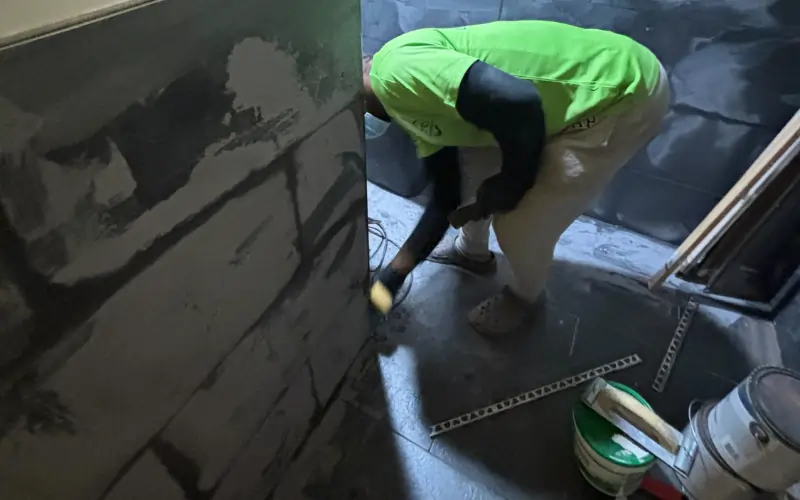
Strip and wax, carpet extraction, gym floor refinishing happens after the deep clean, not before or during. A floor that gets stripped and waxed while construction dust is still in the space will embed that dust in the new finish. The floor will look finished and perform worse than it should within weeks of the school year starting.
5. Classroom reset last.
Furniture back in position, storage organized, supplies in place. This is the final step — after all the work that requires empty, accessible rooms is done.
The Summer Reset Checklist
Organized by phase, in sequence. Phase 2 doesn’t start until Phase 1 is confirmed complete.
Phase 1: Renovation and Construction Closeout
- All renovation and construction work confirmed complete in each area
- Contractor walkthrough and punch list signed off
- Construction debris removed from all affected spaces
- Renovation areas cleared for cleaning crew access
Phase 2: Post-Construction Cleaning (renovated areas only)
- Construction dust removed from all horizontal and vertical surfaces
- HVAC vents and diffusers cleared of construction particulate
- Window ledges, sills, and frames cleaned
- Cabinet interiors cleaned
- Fixtures detailed
- Floors cleaned of adhesive residue, grout haze, and construction debris
- Final post-construction walkthrough completed before deep cleaning begins
See our post-construction cleaning services for scope detail.
Phase 3: Deep Cleaning (all areas)
- High dusting completed: ledges, light fixtures, ceiling corners, HVAC diffusers
- All classroom surfaces cleaned: desks, chairs, shelving, windowsills, door frames
- Restroom restoration: grout scrubbing, fixture cleaning, partition cleaning, drain cleaning
- Cafeteria deep clean: equipment surfaces, hood vents, floor drains, grease accumulation
- Gymnasium cleaning: bleachers, equipment, walls, high surfaces
- Administrative office cleaning
- Storage area cleaning
- Window cleaning: interior and accessible exterior
- High-touch surface restoration: door handles, light switches, push plates throughout
For deep cleaning scope and frequency guidance, see our NYC deep cleaning services.
Phase 4: Floor Restoration
- VCT floors: strip and wax completed in all areas
- Gym floor: condition assessed. re-coat, refinish, or restore as required
- Carpets: extraction completed, stains treated, condition documented
- Floor damage identified and repair timeline confirmed
- Floor finish cured before furniture return (confirm cure time with floor crew)
For strip and wax specifics, see our commercial floor strip and wax services and article on common strip and wax mistakes.
Phase 5: Classroom and Facility Reset
- Furniture returned and positioned
- Classroom supplies organized and stored
- Shared spaces prepared
- Restrooms fully stocked
- Cafeteria set for first day
- Entrances clean and welcoming
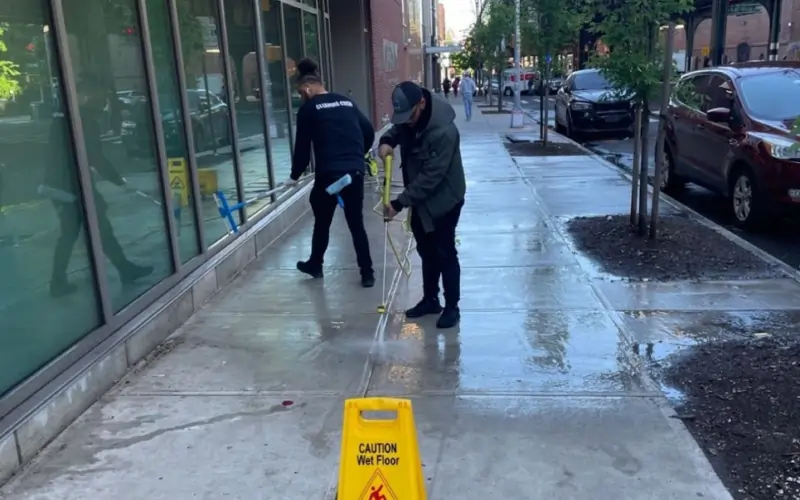
- Exterior grounds reviewed
- Signage updated where needed
- Safety issues resolved and documented
Phase 6: Readiness Verification
- Facility director walkthrough completed — all areas
- Classroom cleaning checklist verified
- School bathroom checklist verified
- HVAC systems confirmed operational
- Building inspections completed
- Deferred maintenance items documented with resolution timeline
- Staff readiness walkthrough completed before student return
How Long Does Each Phase Take? A 100,000 Sq Ft Example
Timing estimates are one of the most common gaps in summer reset planning. The table below uses a 100,000 sq ft NYC school as a reference point — a mid-to-large charter or public school building across multiple floors. Assumptions: approximately 30% of the building affected by summer renovation work, approximately 60,000 sq ft of VCT flooring requiring strip and wax, 8–10 person cleaning crew, 3-person floor restoration crew.
| Phase | Scope Assumption | Estimated Duration | What Drives the Timeline | Source Basis |
|---|---|---|---|---|
| Phase 1: Renovation closeout | Contractor-dependent | Variable Plan for slippage | Contractor schedule, punch list completion, inspection sign-off | No reliable benchmark; build 1–2 week buffer into plan |
| Phase 2: Post-construction cleaning | ~30,000 sq ft renovated (30% of building) | 3–5 days | Scope of renovation, dust migration, number of floors affected | Industry benchmark: large commercial projects 3–7 days; partial-building scope reduces to lower end |
| Phase 3: Deep cleaning | Full 100,000 sq ft building | 3–5 days | Crew size, building complexity, access | ISSA/APPA production rates for public schools: 1,500–2,500 sq ft/hr routine; deep clean runs ~3× slower. 100–200 labor hours total; 8–10 person crew completes in 3–5 shifts |
| Phase 4: Floor restoration | ~60,000 sq ft VCT strip and wax | 2–3 weeks | Wax curing time between coats is the constraint, not labor hours | Labor hours: 50–75 hrs for a 3-person crew. But 3–5 wax coats require cure time between applications. Industry sources confirm school floor projects “take weeks” and are done during recesses for this reason |
| Phase 5: Classroom reset | Full building — furniture, supplies, prep | 3–5 days | Number of classrooms, whether furniture was moved for floor work, supply delivery timing | No published benchmark; estimate based on typical school size of 30–50 classrooms at 1–2 hrs per room |
| Phase 6: Readiness verification | Full building walkthrough | 1–2 days | Size of facility management team, complexity of documentation required | No published benchmark; based on operational practice |
| Staff return buffer | — | 2 weeks minimum | Contractor overruns, curing delays, punch list items from verification | Build this in before staff return, not before student return |
Total minimum active project time for a 100,000 sq ft school: 5–6 weeks of sequential work, plus buffer.
Practical implication
For a September opening, summer reset work should begin no later than July 1. For schools with significant renovation scope, late June is safer. The floor restoration phase alone (primarily because of wax curing time, not labor) takes 2–3 weeks and cannot be compressed without compromising the finish.
What facility directors should be careful to avoid underestimating
The floor restoration timeline. The labor to strip and apply wax to 60,000 sq ft is 50-75 hours, a 3-person crew can execute that in under two weeks of working hours. But each wax coat needs to cure before the next is applied, and 3-5 coats are standard. That curing schedule is what stretches floor restoration to 2-3 weeks and why it has to be planned as the longest single phase in the reset.
Sources: ISSA/APPA production rate benchmarks via Cleaning & Maintenance Management and TCS Floors industry guidance.
Two Different “Ready” Thresholds
One thing the checklist doesn’t capture: there are two readiness thresholds in a school reopening, and they’re not the same.
Staff-ready
This is when teachers and administrative staff can return to prepare their spaces. At this point, construction work is done, deep cleaning is complete, and floors are restored. But furniture may still be in corridors, supplies may not be distributed, and some spaces may still be in transition. Staff can work in and around that. Students can’t.
Student-ready
This is a higher threshold. Every space accessible to students needs to be finished, clean, stocked, and safe before the first student arrives. Restrooms fully stocked. Cafeteria set. Entrances presentable. Corridors clear. Nothing that looks like a project in progress.
The timeline between these two thresholds is where most of the classroom reset work happens, and it’s the window that gets compressed when renovation work runs late. Building that buffer into the summer planning timeline isn’t optional. When a renovation contractor runs two weeks over, the buffer between staff return and student return is what absorbs it. If there’s no buffer, students arrive in a building that isn’t ready.
When to Bring in External Contractors
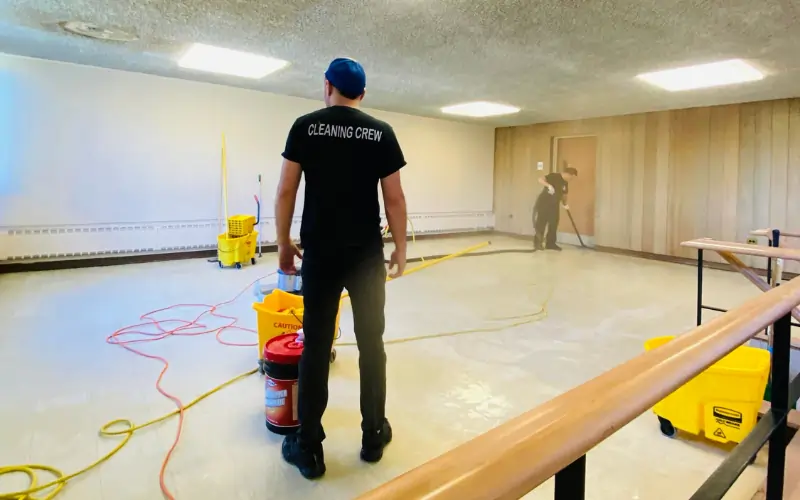
Most in-house custodial teams are built for the academic year, not the summer reset. As an example: a summer scope that includes strip and wax across 40,000 sq ft of VCT, post-construction cleaning in renovated spaces, carpet extraction throughout, plus high dusting in spaces that haven’t been accessed since last summer. This scope requires equipment, labor, and technical expertise that most school custodial teams don’t have on staff.
The work that most consistently benefits from external contractors:
Large floor restoration projects
Strip and wax at school scale requires industrial equipment and an experienced crew that knows how to sequence the work without trapping themselves in a corner. A crew that strips a hallway in the wrong direction and has to walk across wet finish has just contaminated the floor they spent four hours preparing.
Post-construction cleaning
This is a different technical scope from standard cleaning. The equipment, the chemical protocols, and the sequencing are specific to construction environments. Sending a standard cleaning crew into a post-renovation space without post-construction training produces a building that appears clean and isn’t.
High dusting
Accessing ceiling-level surfaces safely requires equipment and protocols that go beyond what most custodial teams carry. It also needs to happen before anything else. So getting it done correctly on the first pass means the deep cleaning that follows it actually holds.
Multi-building resets on compressed timelines
When the summer window is tight and multiple buildings need to be reset simultaneously, internal teams simply don’t have the headcount. External contractors are how the timeline gets met.
For a broader look at school cleaning programs throughout the academic year, see our school cleaning guide. For NYC-specific school cleaning services, see our school cleaning services
school CLEANING Services · NYC
Talk to Us About Your School Cleaning Requirements
We serve schools and educational facilities in NYC. Get a deliver a written scope within 48 hours. No obligation.
Request a Quote
We will contact you within the hour to start working on your quote.
Your contact information
FAQ
Frequently Asked Questions
Worth reading
APPA Cleaning Standards: The NYC Facility Manager’s Guide to Cleaning Standards
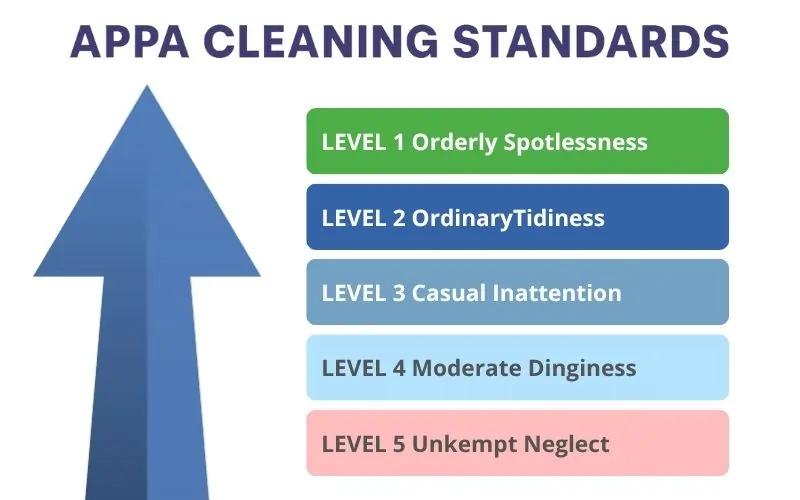
In Short The five levels of clean, which one to aim for, what it costs…
Cleaning a Classroom: Guide & Checklist For NYC Schools
Classroom cleaning is the daily and deep cleaning, disinfection, and dust and floor care that…

School Restroom Cleaning in NYC: Guide for Safety & Compliance
In a NYC school, the restroom is usually where you find out how good the…