
In Short
Construction waste removal is an important step in any renovation, tenant improvement, or new construction project, but removing debris doesn’t mean a project is ready for turnover. Contractors must also address dust control, safety, recycling requirements, final inspections, and occupancy preparation. In this guide, we’ll explain construction waste drop-off options in NYC, best practices for debris management, and how waste removal fits into the broader post-construction cleaning process that prepares a facility for handover.
The dumpster is gone. The debris is out. The GC is telling ownership the site is ready.
It isn’t.
We get called into post-construction cleanups across all five boroughs — tenant improvements in Midtown, school renovations in the Bronx, warehouse buildouts in Brooklyn — and the same situation plays out more often than it should. Waste removal finished days ago. The inspection window is closing. And the building still has construction dust on every horizontal surface, HVAC vents caked with drywall particulate, and flooring that hasn’t seen a mop since framing started.
Debris removal and project turnover are not the same thing. Contractors who treat them as one task lose time on punch lists, fail inspections, and hand over buildings that generate complaints within the first week of occupancy.
Here’s what the process actually looks like — and where most projects go wrong.
Why Debris Removal Doesn’t Finish the Job
Removing waste addresses volume. It doesn’t address contamination.
Once the scrap drywall, cardboard, wood offcuts, metal studs, and pallets are off-site, what’s left is invisible — and invisible is the problem. Fine construction dust migrates through an entire building during a project. It settles in HVAC systems, lands on window frames, embeds in flooring materials, and coats every fixture the trades touched. None of that goes into a dumpster.
We’ve walked buildings in Manhattan where debris removal was complete and professional, but the MEP rough-in dust alone would have taken a 10-person crew two days to address before the space was ready for an inspector. The GC thought the site was two days from turnover. It was closer to five.
Debris removal and post-construction cleaning are two different scopes:
Construction waste removal covers:
- Scrap materials and packaging
- Demolition debris
- Pallets and crating
- Excess and unused materials
- Waste transportation and disposal
Post-construction cleaning covers:
- Construction dust — rough, light, and final phase
- HVAC vent cleaning after trades complete
- Glass and window detailing
- Surface cleaning on all fixtures, hardware, and finishes
- Floor restoration and preparation
- Occupancy-readiness verification
A building can clear debris and still fail an inspection. We’ve seen it. The contractors who plan for both scopes from the start finish faster and hand over cleaner.
That’s why many contractors schedule professional post-construction cleaning services immediately after waste removal is completed.
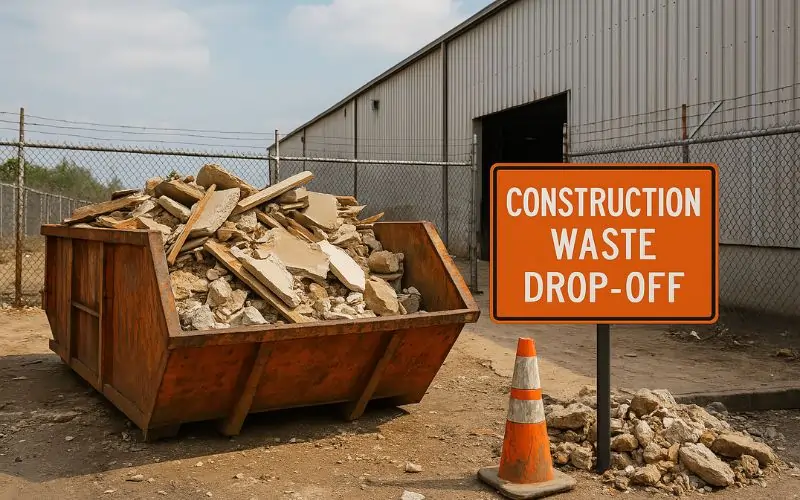
Construction Waste Drop-Off Options in NYC
For contractors managing their own waste stream, NYC has licensed transfer stations and recycling facilities that accept construction debris. The right option depends on what you’re removing and how much of it.
Licensed Transfer Stations
Handle mixed construction debris — drywall, wood, concrete, packaging together. Right for most general renovation and demo projects. The NYC Department of Sanitation maintains the current list of licensed facilities.
Material-Specific Recycling Facilities
If you’re separating waste streams — and on larger commercial projects, you should be — NYC has facilities that accept concrete, clean wood, cardboard, and metal separately. Separation usually reduces disposal costs and satisfies recycling requirements for LEED-tracked projects.
Roll-Off Containers
Standard for any project generating continuous debris over weeks. Size the container to the project phase, not the whole project — oversized containers sitting on a Manhattan street block pedestrian access and draw violations.
One thing worth saying plainly: we’re a cleaning company, not a waste hauler. We don’t manage debris removal or dumpster placement. What we do is come in after that’s done and prepare the building for what’s next — inspection, walkthrough, or occupancy. If you’re looking for current facility locations and permit requirements, go directly to the NYC Department of Sanitation. That information changes.
The NYC Department of Sanitation recycling guidelines provide additional information regarding commercial recycling requirements.
The Real Cost of Skipping the Transition Step
Most project managers we work with understand that debris removal costs money. What they underestimate is what happens when the transition between debris removal and occupancy prep isn’t planned.
Delayed inspections
Inspectors can’t properly assess a space when dust is visible on surfaces, filters are contaminated, or pathways still have packaging debris. One failed walkthrough in New York can push a certificate of occupancy by two weeks. On a tenant improvement with a lease start date, that’s real money.
Harder final cleaning
Every day debris stays on-site, dust migrates further into the building. The longer the gap between waste removal and professional cleaning, the more the cleaning scope grows. We’ve taken on jobs where a one-week delay in calling us doubled the floor care scope because dust had worked into the finish.
Punch list bloat
When cleaning isn’t coordinated, remaining trades are still walking through spaces that haven’t been detailed. Fingerprints on glass, boot marks on finished floors, dust on fixtures — all of it ends up on the punch list. All of it takes longer to address after the fact than it would have during a coordinated closeout sequence.
OSHA’s housekeeping standards for construction sites address the baseline — clear pathways, managed debris, orderly jobsite. But a site that meets OSHA standards is not a site that’s ready for occupancy. Those are different thresholds.
Where Dust Becomes the Bigger Problem
This is the part contractors miss most often.
After debris is cleared, dust is the primary obstacle to turnover. It’s also the hardest to see on a walkthrough — until you look at the right surfaces.
On commercial projects we’ve cleaned in New York, the most common problems after waste removal are:
- HVAC supply and return vents packed with drywall dust from interior work
- Fine particulate on window frames and glazing that shows up under inspection lighting
- Construction dust embedded in flooring that reappears after a surface mop
- Residue on plumbing fixtures, hardware, and light covers that wasn’t visible in work lighting
This is why post-construction cleaning happens in phases. Rough cleaning removes the visible debris the waste haulers missed. Light cleaning addresses surfaces, fixtures, and windows. Final cleaning brings the building to occupancy standard — the level where an owner can walk the space and hand keys to a tenant.
If you skip the phased approach and go straight to a single final clean, you almost always miss something. Dust disturbed during final cleaning resettles on surfaces you already cleaned. That’s how buildings that “passed” the cleaning walkthrough generate complaints in the first 30 days of occupancy.
For a detailed breakdown of what each phase covers, see our guide to the 3 phases of post-construction cleaning.
For a deeper look at the process, see our guide on construction dust removal and cleanup.
Floor Care After Waste Removal
Flooring is usually the last major challenge before a building is ready for handover — and the one most likely to delay turnover if it isn’t planned for.
Construction activity is hard on floors. Foot traffic from trades, tool drag marks, adhesive residue, and embedded dust all require different treatments depending on the floor type and finish. A quick mop doesn’t cover it.
Depending on the facility, turnover floor care may include:
- VCT preparation and strip-and-wax for commercial tile
- Marble or stone restoration where surfaces were worked around during construction
- High-speed burnishing after protective coatings are removed
- Concrete floor cleaning in warehouse or industrial spaces
We scope floor care as part of the post-construction cleaning process, not as a separate engagement. By the time final cleaning starts, we already know what the floors need. That’s what keeps the turnover timeline from stretching.
For more detail on what commercial floor restoration involves, see our floor cleaning services page.
How to Plan for a Cleaner Turnover
The projects that close fastest treat waste removal and post-construction cleaning as one coordinated sequence, not two separate contracts.
That means bringing the cleaning team in during the project — not after it. We can scope the cleaning work based on the construction phase, identify which areas need what level of attention, and be ready to mobilize when debris removal wraps. That coordination eliminates the gap where dust migrates and punch lists grow.
It also means using a post-construction cleaning checklist before the owner walkthrough — not as a formality, but as a real gate check. If the checklist isn’t passing, the walkthrough shouldn’t happen. Owners and tenants who walk a building that isn’t ready lose confidence fast, and that confidence doesn’t come back easily.
What This Means If You’re Planning a Project
If you’re managing a renovation, tenant improvement, or new construction project in New York City, the question isn’t whether you need post-construction cleaning. It’s whether you’re coordinating it with waste removal or treating it as an afterthought.
The contractors we work with regularly have figured out that coordination reduces their overall closeout timeline. One scope flows into the other. The building closes cleaner, inspections move faster, and tenants move in without complaints.
If you want to talk through what the cleaning scope looks like for your project, contact us or learn more about our post-construction cleaning services in NYC.
We work across all five boroughs and know what turnover in this city actually requires.
post-construction CLEANING SERVICES · NYC
Tells Us Your Construction Handover Date. We’ll Handle The Rest.
Project details, timeline, and scope, send us what you have. We’ll confirm availability, scope, and pricing within the same business day.
Request a Quote
We will contact you within the hour to start working on your quote.
Your contact information
Frequently Asked Questions
Frequently Asked Questions
Worth reading

Outsourcing Your NYC Commercial Construction Cleanup [Guide]
Self-performing looks cheaper until you count the liability. Here is what construction cleanup costs in-house,…

How To Clean Up Construction Dust On Construction Sites [Guide]
What construction dust actually is, why NYC treats it as a regulated hazard, and how…
What Is Post-Construction Cleaning? A Project Manager’s Guide
IN SHORT Substantial completion is not handover-ready. Every construction project manager who has walked a…