
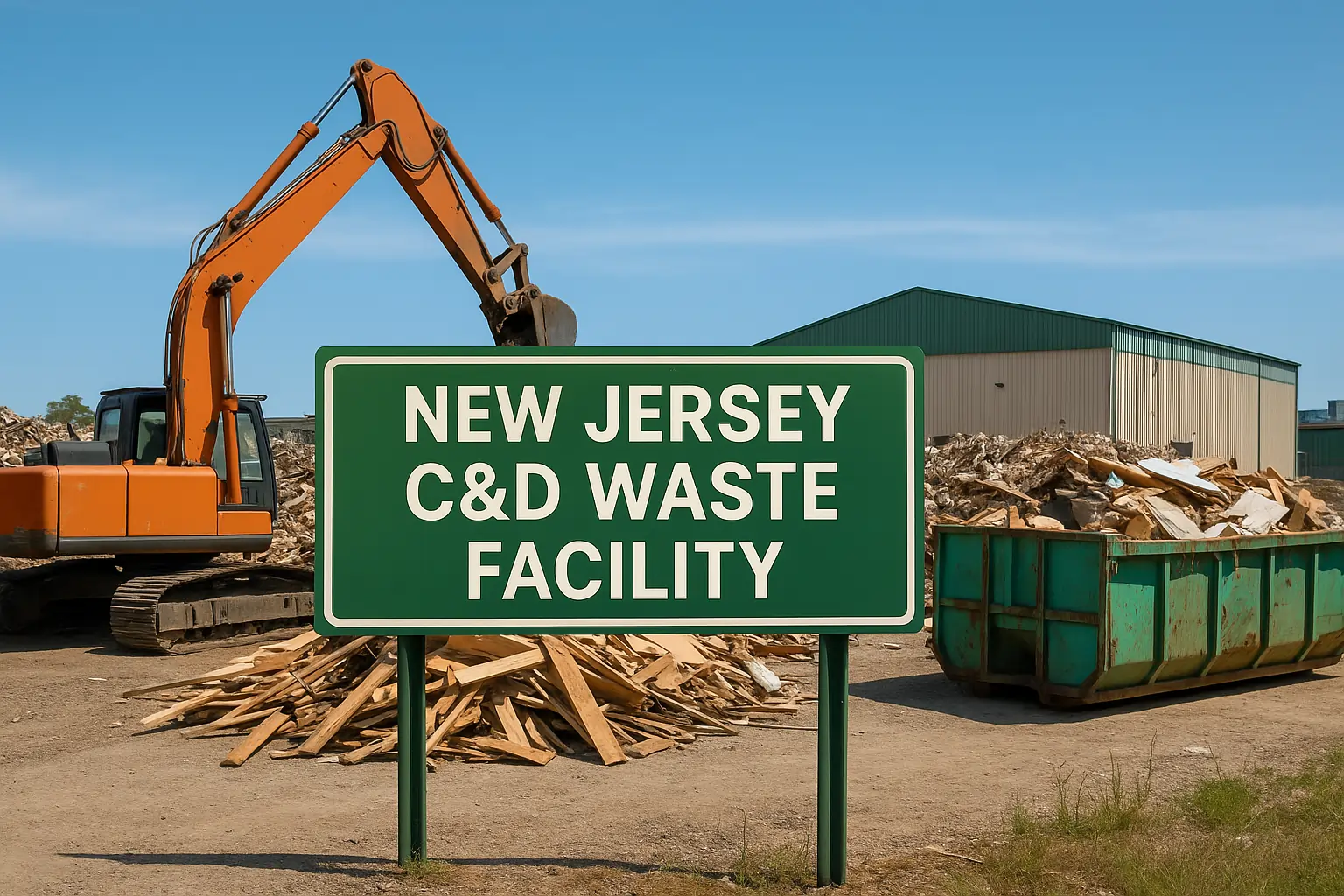
Dust causes more turnover delays than debris. We see it on projects across Hudson County, Essex County, and up through Passaic every season.
By the time the last trade leaves the site, most contractors have a waste removal plan. What they don’t have is a transition plan — the step between debris off-site and building ready for inspection. That gap is where project schedules slip, punch lists grow, and owners walk spaces that aren’t ready.
This piece covers how construction waste recycling fits into the NJ project closeout picture, and what the contractors who close cleanest actually do differently.
The Job Doesn’t End When Construction Does
We’ve been called into post-construction cleanups in Jersey City, Newark, and warehouse buildouts across the 78 and 280 corridors. The pattern is consistent: the GC believes they’re three days from turnover. The site has a different opinion.
Debris removal finished on schedule. But the building still has drywall particulate in the HVAC supply vents, construction dust embedded in the flooring, and window frames that look fine under work lighting and terrible under an inspector’s flashlight. The dumpster is gone. The building isn’t ready.
Here’s what “done” actually requires:
- Debris and waste removed from site
- Recyclable materials properly separated and processed
- Construction dust addressed — rough, light, and final phase
- HVAC vents cleared after trades complete interior work
- Floors restored to occupancy standard
- Fixtures, glass, and surfaces detailed for inspection
Most project teams have a plan for the first item. They’re improvising on the rest.
Why Recycling Matters Beyond the Environmental Case
Most of what’s written about construction recycling leads with sustainability. That matters — but it’s not what drives decisions on a commercial jobsite in New Jersey.
The operational case is more immediate. On projects where materials are separated early and consistently:
- Disposal costs come down. Mixed debris hauling is more expensive per ton than clean material streams.
- Site organization improves throughout the project, not just at closeout.
- Final cleaning scope shrinks. Organized sites accumulate less embedded debris in finished surfaces.
- Recycling documentation is cleaner for LEED-tracked projects, which avoids a closeout scramble.
On a tenant improvement or school renovation, the difference between a separated waste stream and a mixed dumpster situation usually shows up at two points: disposal invoice and cleaning scope. Both are controllable. Most contractors don’t control them because the plan wasn’t made before debris started accumulating.
Common Recyclable Materials on NJ Construction Projects
Recycling programs across New Jersey accept most standard construction waste streams. Common materials include:
- Concrete and masonry — crushed and reused as base material or fill
- Metal — steel studs, pipe, conduit, aluminum framing
- Clean wood — dimensional lumber, plywood, framing offcuts (unpainted, untreated)
- Cardboard and packaging — generated heavily during MEP rough-in and finish installation
- Asphalt — primarily from site work and paving projects
What most facilities won’t accept mixed: painted wood, gypsum board with joint compound, contaminated materials. Separation at the source — not at the transfer station — is what makes a recycling program work.
Construction Waste Recycling Facilities in New Jersey
NJ contractors have three primary options depending on project scale and material type.
Licensed Transfer Stations
Accept mixed construction and demolition debris, then sort for recycling and disposal. Right for most general renovation projects where full separation isn’t practical. The NJ Department of Environmental Protection maintains the licensed facility list.
Material-Specific Recycling Facilities
For projects with separated waste streams — concrete recyclers, metal scrap processors, clean wood facilities. More logistics upfront, lower disposal cost, better documentation for LEED and green building programs.
Roll-Off Container Programs
Standard for large commercial projects. The key is container strategy: one container for recyclables, one for general debris, sized to the active phase of work. Oversized containers on NJ commercial sites create permitting issues and housekeeping problems.
The specific facility matters less than having the plan in place before the first dumpster fills. Facility selection is a logistics decision. Not having a plan is an operational failure.
After Debris Is Gone: The Part That Actually Delays Turnover
Here’s the honest answer on what slows down NJ project closeouts: dust.
Not debris. Debris is visible. Debris gets scheduled. Dust doesn’t show up until an owner walks the space on a clear day, or until the inspector turns on their flashlight and runs a finger across the windowsill.
On commercial projects we’ve cleaned across New Jersey — office buildouts in Jersey City, school renovations in Newark, industrial retrofits in Secaucus — construction dust is the consistent thread. Fine drywall particulate and concrete dust migrate through a building during construction and settle everywhere: HVAC vents, horizontal surfaces, window frames, flooring joints, fixture hardware. A mop pass doesn’t address it. A surface wipe doesn’t address it.
That’s why the sequence matters:
- Debris and waste removal
- Rough cleaning — removes visible construction debris the trades left behind
- Light cleaning — addresses surfaces, fixtures, and glass
- Final cleaning — brings the building to occupancy standard
Skip the sequence and compress it into a single “final clean,” and you’ll still be cleaning after the owner walkthrough. We’ve seen it on projects where the contractor called one crew in for one day. The space looked clean until light hit the windows.
For a detailed breakdown of each phase, see our guide to the 3 phases of post-construction cleaning.
What Organized Contractors Do Differently
The project teams that close cleanest in New Jersey aren’t doing something exotic. They’re sequencing correctly and starting early.
Waste management is in the project plan from day one. Container placement, separation protocol, and recycling facility selection happen during preconstruction — not during closeout scramble.
Cleaning is contracted before the project ends. We get called in during the active project on well-run jobs, not the week before the owner walkthrough. That lets us scope the cleaning work accurately and mobilize the right crew size for the actual conditions.
The transition between debris removal and final cleaning is explicit. There’s a handoff. Waste hauler confirms debris is off-site. Cleaning crew comes in for rough cleaning within 24–48 hours. Light and final cleaning follow in sequence. Nothing sits.
The checklist gates the owner walkthrough. The post-construction cleaning checklist isn’t a formality on well-run projects. It’s the document that says the building is ready — or isn’t. Owners who walk a building that fails basic surface checks don’t forget it.
One More Thing Worth Saying
The contractors we work with regularly in New Jersey have figured something out: waste removal and post-construction cleaning aren’t two separate contracts. They’re two phases of one closeout process.
When they’re coordinated, projects close faster. Inspections move. Tenants move in without complaints. And the punch list stays short because problems were caught in sequence rather than discovered on walkthrough day.
If you’re planning a commercial project in NJ and want to talk through the cleaning scope, learn more about our post-construction cleaning services in Jersey City or contact us directly. We work across Hudson County, Essex County, and the broader Tri-State area.
post-construction CLEANING SERVICES · NYC
Tells Us Your Construction Handover Date. We’ll Handle The Rest.
Project details, timeline, and scope, send us what you have. We’ll confirm availability, scope, and pricing within the same business day.
Request a Quote
We will contact you within the hour to start working on your quote.
Your contact information
FAQ
Frequently Asked Questions
Worth reading

Outsourcing Your NYC Commercial Construction Cleanup [Guide]
Self-performing looks cheaper until you count the liability. Here is what construction cleanup costs in-house,…

How To Clean Up Construction Dust On Construction Sites [Guide]
What construction dust actually is, why NYC treats it as a regulated hazard, and how…
What Is Post-Construction Cleaning? A Project Manager’s Guide
IN SHORT Substantial completion is not handover-ready. Every construction project manager who has walked a…