In Short
A clean office isn’t the goal. A professional workplace is. The difference matters more than most facility managers realize — and more than most cleaning vendors are equipped to deliver. This guide covers what a complete office cleaning program should include, how to structure cleaning frequencies, what gradual decline looks like before it becomes a complaint, and how NYC compliance requirements fit into the picture.
What You’re Actually Managing
A law firm billing $800 an hour cannot afford a lobby that feels neglected. A consulting firm selling strategic expertise cannot ignore the environment in which that expertise is delivered. A financial services company whose conference rooms look tired is making a statement about attention to detail — whether it means to or not.
I’ve been in hundreds of NYC office buildings since 2018. Organizations that treat office cleaning as a maintenance expense eventually pay for it in occupant complaints, client impressions, and asset replacement costs that preventive maintenance would have deferred by years. The organizations that treat it as an operational function — planned, inspected, documented — don’t have those conversations.
The Three Layers of Office Cleaning
Most office buildings are running layer one and calling it a complete program. A complete program has three distinct layers — each solving a different problem, each required for a building that holds its standard over time. Understanding which layer is missing from your current program is usually the fastest way to diagnose why complaints are appearing or why the facility feels like it’s slowly losing ground.
The three-layer framework
Layer 1
Routine Janitorial
Daily and weekly baseline. Trash removal, vacuuming, restroom servicing, surface wiping, kitchen cleaning, floor maintenance. Keeps the workplace functional and presentable. Necessary — not sufficient on its own.
Maintains the surface condition
Layer 2
Deep Cleaning
Periodic restoration. Carpet extraction, upholstery cleaning, high dusting, vent cleaning, detailed restroom restoration. Skip it long enough and routine cleaning stops holding — the building looks cleaned but doesn’t feel clean.
Restores the underlying condition
Layer 3
Asset Preservation
Periodic restoration. Carpet extraction, upholstery cleaning, high dusting, vent cleaning, detailed restroom restoration. Skip it long enough and routine cleaning stops holding — the building looks cleaned but doesn’t feel clean.
Protects the building’s most expensive finishes
What Success Looks Like Depends on What You’re Managing
Before setting a cleaning scope, answer this honestly: what would make you say, one year from now, that the program worked? The answer differs significantly by office type — and a cleaning program scoped for the wrong target will underdeliver regardless of how well it’s executed. Identify your situation below before evaluating any vendor or adjusting any scope.
Consistency above all
Clean restrooms at 9 AM and 3 PM. Common areas that don’t deteriorate between cycles. No occupant complaints that weren’t caught by the cleaning program first. No visible decline that gets noticed before you do.
The environment is part of the product
The lobby, conference rooms, and restrooms clients use during visits are part of the service being delivered. A dull floor or tired restroom forms an impression about operational discipline that’s hard to revise.
A documented standard under scrutiny
Building inspections, tenant audits, lease renewal conversations. In NYC’s commercial real estate market, building condition shows up in occupancy rates and the terms tenants accept. The correlation between cleaning program quality and tenant retention is real.
Overnight cleaning alone won’t hold the standard
Eight hours of active use changes a building. Day porter coverage closes the gap the overnight crew can’t — restroom monitoring, spill response, lobby upkeep during the operating day. See our day porter guide.
Office Cleaning Checklists by Frequency
The checklists below are organized by cleaning cycle — daily, weekly, monthly, and quarterly or annual. Use the tabs to navigate directly to the frequency you need. Each item is checkable, so you can use this as a working tool during staff briefings, vendor walkthroughs, or self-audits. The quarterly tab covers the work most programs defer for too long.
Office Cleaning Frequency Checklist
Recognising Gradual Decline Before It Becomes a Complaint
Most office cleaning complaints aren’t caused by obvious failures. They’re caused by gradual decline that nobody noticed until it became visible. The five conditions below are the most reliable early indicators that routine cleaning is no longer holding the standard — and what type of intervention each one calls for. If two or more apply to your building, the program needs more than a daily scope adjustment.
Gradual decline — five indicators
Floors don’t respond to routine maintenance
Buffing produces diminishing return. The finish layer has degraded past what surface maintenance can recover.
Carpets retain odors in natural light
Look clean but smell or appear darker than they should. Embedded soil is past what vacuuming addresses.
Restrooms pass inspection but feel tired
Occupant comments about general feel despite daily cleaning passing checklist review.
Metal & stone look duller than 12 months ago
No specific incident — gradual dulling from traffic, oxidation, and improper cleaning products.
→ Asset preservation
New visitors notice what regulars don’t
First impressions on visitors differ from daily occupant experience. The building looks fine from inside. It doesn’t to someone new.
NYC compliance context
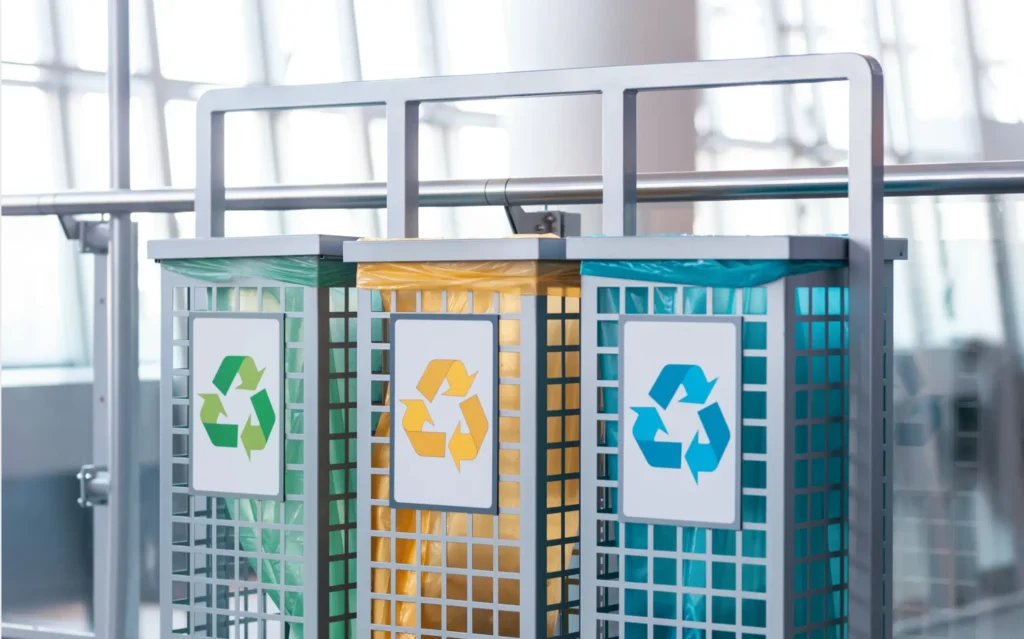
NYC office buildings operate under specific waste management and sanitation requirements that cleaning programs need to account for. The NYC Department of Sanitation sets commercial recycling mandates — cardboard, metal, glass, plastic, and organic waste streams each have specific handling requirements. Violations land on the building owner or property manager, not the tenant. A cleaning vendor whose crew isn’t correctly separating commercial waste is creating compliance exposure for the building.
OSHA Hazard Communication standards require that any cleaning chemicals used on-site have current SDS documentation accessible to building staff, with documented training for anyone handling those chemicals. If your vendor can’t produce SDS records and training logs on request, that gap is yours in an inspection — not theirs.
For a full breakdown, see our NYC office building sanitation and disposal rules guide.
Evaluating Your Office Cleaning Program
The most common mistake organizations make is evaluating their program by complaint volume. No complaints means the program is working. That’s a lag indicator — by the time complaints appear, the standard has been slipping for weeks.
Three questions that actually reveal program quality: Can your vendor show you a documented inspection report from last Tuesday? What happens when a staff member calls out overnight? When did the carpets last get extracted, the floors get a restorative pass, and the vents get cleaned? If the answers are vague, the program is running on maintenance mode without the restoration work that holds the maintenance together.
For the full vendor evaluation framework, see our how to choose a commercial cleaning company guide.
Office Cleaning Services and Deep Cleaning — What We Offer
If this guide has helped you identify what your office cleaning program is missing, the next step is a conversation about your specific building. Our NYC office cleaning services cover offices across all five boroughs and into NJ, from daily janitorial programs through to full asset preservation and specialty surface care. Where a building’s needs run wider than offices alone, the same quality system extends across every facility type through our commercial cleaning services. And for offices where accumulated buildup has gone past what routine cleaning can recover, our commercial deep cleaning services are scoped to your facility before we begin.
Office Cleaning Services · NYC · NJ
Talk to Us About Your Office Cleaning Requirements
We serve offices and office buildings across NY, and NJ – and deliver a written scope within 48 hours. No obligation.
QUESTIONS FROM FACILITY DIRECTORS
Frequently Asked Questions
Worth reading
Historic & Landmark Office Buildings in NYC: Why Standard Cleaning Programs Damage Irreplaceable Materials
In Short New York City has more than 38,000 protected landmark properties — including over…
Deep Cleaning & Preventive Maintenance Guide for NYC Offices
In Short Most NYC office buildings have a daily cleaning program. Most don’t have a…
NYC Office Building Sanitation & Disposal Rules – for Facility Managers
In New York City, commercial office buildings face strict Department of Sanitation (DSNY) and Business…