What Separates Average Vendors from Great Ones
In Short
Most cleaning companies that lose a client’s confidence don’t lose it on day one. They lose it on day 90. The building looked great during onboarding. By the third month, standards had slipped, staff had changed, and the facility manager was spending more time managing the cleaning vendor than the rest of their portfolio combined. This guide explains why that pattern is so common, how to identify the vendors that don’t follow it, and what questions actually predict long-term performance — not just a strong first month.
The core distinction
You’re Not Comparing Cleaning Companies. You’re Comparing Operating Models.
I’ve been in this market since 2018. Before that, ten years in NYC real estate. I’ve watched facility managers evaluate cleaning vendors the way they evaluate office supply contracts — comparing service lists, checking prices, calling references. Then six months later, they’re back to square one.
What actually determines cleaning performance over time isn’t the service list. It’s the operating model — whether the company is selling labor or selling a managed program with accountability built into how the work gets done.
Here’s what that looks like in practice. Same building. Same problem. Two different outcomes depending on which model you hired.
It’s Wednesday morning. You walk into the building and the third-floor restrooms haven’t been properly cleaned. You call the vendor. They apologize. Someone didn’t show up last night. A replacement will be in tonight. You’ve spent 20 minutes managing a problem that started at 10 PM and nobody caught until you arrived at 8 AM.
Crew shows up, does tasks, leaves — no system holding the standard
Quality depends on individual effort — doesn’t survive staff turnover
Problems discovered when occupants or the facility manager finds them
No documentation — no paper trail for audits or performance reviews
Onboards strong, drifts by month three
Adds a management task to your day
It’s Wednesday morning. Your weekly report arrived at 7 AM. It shows that on Tuesday night, the supervisor flagged the third-floor restrooms during the post-service walkthrough. The crew corrected it before leaving. You didn’t get a call. You didn’t need to. The system caught it before you did.
Work scoped to your facility, executed against documented standards
Supervisor verifies quality before the crew leaves the building
Issues caught and corrected before they reach your desk
Weekly reporting — quality scores, corrective actions, trends
Standard holds at month twelve, not just month one
Removes a management task from your day
Same night. Same building. The difference is what happens when no one is watching.
Before you compare proposals, decide which type of company your facility actually needs. Most facilities need the second. Most vendor selection processes don’t test for it.
Know what you need first
What Does Your Facility Actually Need?
Different facilities have genuinely different requirements. Before evaluating vendors, answer this question: what would make you say, one year from now, that you chose the right company?
Scenario 01
“I need consistent, reliable daily cleaning.”
You don’t need a complex partner. You need a crew that shows up, does the work correctly, and is consistent enough that you don’t have to think about it. Evaluate on supervision, staff stability, and communication — not service breadth.
Scenario 02
“I need one vendor for everything.”
Floor care, deep cleaning, day porter coverage, post-construction. Ask specifically how they handle specialty scope — their own trained crews, or subcontracted? The handoff is where single-vendor arrangements most often break down.
Scenario 03
“I need the same standard across multiple facilities.”
Ask how they standardize training across locations, how supervisors are deployed in a portfolio, and what the reporting structure looks like when you manage five buildings with one point of contact.
Scenario 04
“I need documentation, reporting, and audit readiness.”
Schools, healthcare-adjacent facilities, and organizations with compliance obligations need a paper trail. Inspection reports, corrective action logs, vendor training records. A vendor who can’t produce those on request is a liability.
Scenario 05
“I need to stop managing the cleaning vendor.”
The most common objective facility managers don’t say out loud. A labor company gives you a crew and you manage the rest. A managed program takes the daily management off your plate. If you’re chasing updates and discovering problems on your own walkthrough — that’s a model problem, not a cleaning problem.
Why it happens
Why the Vendor That Started Strong Doesn’t Finish Strong
I’ve heard this story from facility managers across NYC, NJ, and CT more times than I can count. The vendor onboards well. The building looks great the first few weeks. The account manager is responsive. Issues get addressed immediately. Then, somewhere around month three, something shifts. Staff changes. Communication slows. Issues get fixed only after someone complains. Standards that were consistent in January are inconsistent by April.
The reason this pattern is so consistent is that most cleaning companies build their performance around people rather than systems. When the right people are on-site, the building looks right. When those people change — and in this industry, they will change — there’s no system to hold the standard in their absence. Individual effort doesn’t scale. It doesn’t survive turnover. Systems do.
The framework
The Five Components That Separate Managed Programs from Labor Companies
This is the framework we built Advantage Cleaning around — what we mean by People + Process + Technology. Evaluate every vendor against all five before signing anything.
People
Every company depends on people. The question is whether they’re executing against a documented standard or their own judgment. Staff change. A new crew member on night three in a 60,000 sq ft building shouldn’t be deciding what “clean enough” means.
Process
Strong programs don’t rely on routine — they rely on documented procedures: site-specific instructions, cleaning sequences, inspection checklists, escalation paths. When staff changes, the process holds the quality, not the individual.
Measurement
Average companies define quality subjectively. Exceptional ones define it measurably: was this task completed, was it done correctly, did it meet the documented standard, and how do we know? Without measurement, quality is an opinion.
Technology
The best programs use technology for inspection, documentation, issue tracking, and reporting. When a supervisor inspects the third-floor restrooms at 11 PM and finds an issue, it’s logged, corrected, and in your weekly report. Visibility makes accountability real.
Continuous Improvement
Problems are inevitable. What separates exceptional vendors from average ones isn’t whether problems occur — it’s what happens after. Do issues feed back into training and procedures, or get noted and forgotten? The Advantage Cleaning quality system program we run get better over the life of the contract, not just at the start.
Evaluation tool
The Questions That Actually Predict Performance
Most vendor evaluations ask the wrong questions. Years in business, insurance, references — those matter, but they don’t tell you how the company performs at month six. Use this as a working checklist in your evaluation.
Check off each question below as you get a satisfactory answer.
Vendor Evaluation Checklist
0 of 7 answeredA vendor who answers in general terms (“we maintain high standards”) doesn’t have a measurable definition. You need something verifiable.
The single most revealing request you can make. If it doesn’t exist, quality is not being verified. If it’s a generic one-page checklist, accountability is low.
Not “supervisors are available 24/7” — how often does a supervisor walk the building after the crew to verify the work? This reveals whether quality is being checked or assumed.
Coverage planning is where most cleaning programs break down. A vague answer means the facility manager is the backup plan.
If the answer is “the new person shadows the departing one,” site knowledge breaks down every time there’s turnover. Documented procedures are what hold quality independent of any individual.
When an issue is found during inspection — what happens next? A real corrective action process can be walked through specifically.
Most vendors aren’t prepared for this question. Listen for whether the answer is about onboarding or about the ongoing system.
When selecting the right cleaning vendor we advise that you take a profound interest in how the cleaning program will be managed after onboarding. Cleaning schedules, inspections, reporting, periodic services, and accountability all play a role in long-term success. Our Commercial Cleaning Facility Operations Guide explains how these elements work together to maintain consistent standards throughout the life of a contract.
The real purchase
What You’re Actually Buying
After reviewing proposals, walking facilities, checking references, and comparing pricing, most facility managers arrive at the same realization. You’re not buying cleaning. You’re buying confidence that the building is being managed — not just serviced.
When a managed program is working, these aren’t aspirations — they’re the operating condition every day.
A supervisor walked the restrooms last night before the crew left. If something was wrong, it was corrected and documented before you arrived this morning.
The standard you agreed on in month one is the standard being held in month twelve — regardless of who was on the crew last Tuesday.
When your leadership asks how the cleaning program is performing, you have documentation to show them — not just a sense that things seem fine.
Issues are caught before occupants notice. When they do appear in your weekly report, they include the corrective action already taken.
Cleaning isn’t something you manage. It’s something that performs — while you focus on the rest of your portfolio.
That confidence doesn’t come from a strong sales presentation. It comes from a system designed to perform when no one’s watching.
If you’re currently evaluating cleaning vendors in New York City, our Commercial Cleaning Services NYC program combines supervisor verification, documented cleaning plans, KPI reporting, and one accountable point of contact, all elements are an integrated part of our quality system to ensure consistant high-quality performance.
Commercial CLEANING New York City · Commercial Cleaning Jersey City NJ
Commercial Cleaning That Runs Without Constant Follow-Up
For facility managers who need consistency, accountability, and documented execution across every shift.
Supervisor-led quality control · Site-specific cleaning plans · KPI reporting & inspections · Single point of accountability
Request a Quote
We will contact you within the hour to start working on your quote.
Your contact information
FAQ
Frequently Asked Questions
Worth reading
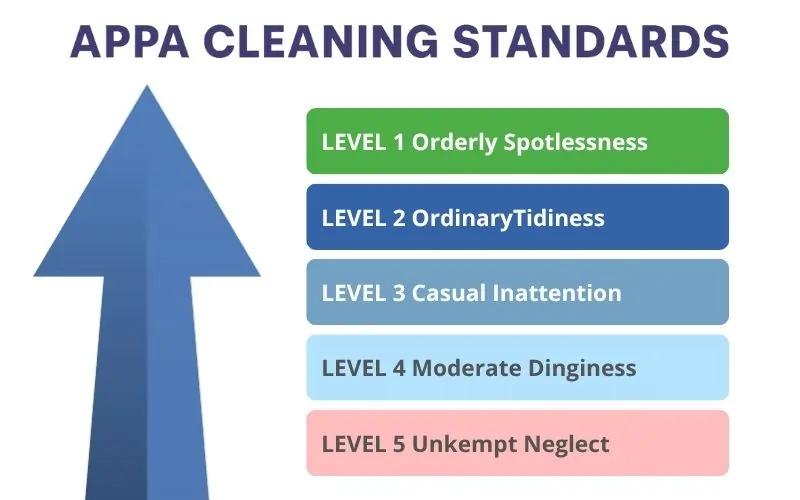
APPA Cleaning Standards: The NYC Facility Manager’s Guide to Cleaning Standards
In Short The five levels of clean, which one to aim for, what it costs…

What Is “Green Cleaning”? Detailed guide for NYC Facility Managers
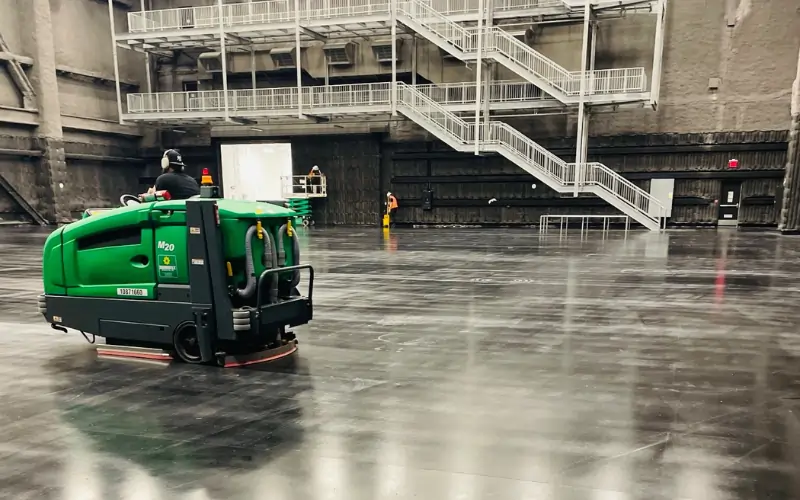
The Warehouse Cleaning Guide for Warehouse Facility Managers
In Short Warehouse cleaning is a safety and compliance function, not housekeeping. The hazards it…

When Should a Commercial Facility Be Disinfected? Pro Guide
Quick Answer Disinfect high-touch surfaces daily in high-occupancy facilities, and immediately after any confirmed illness,…
Mold vs. Mildew: What Is the Difference? How to find it, What to do About it
In Short You notice a musty smell in your office, restroom, or mechanical room. Maybe…
Historic & Landmark Office Buildings in NYC: Why Standard Cleaning Programs Damage Irreplaceable Materials
In Short New York City has more than 38,000 protected landmark properties — including over…