Construction Cleaning
Outsourcing Your NYC Commercial Construction Cleanup [Guide]
Outsourcing construction clean-up is absolutely necessary. In this guide we will navigate you through the entire process, and how to mange it
July 14, 2026
Construction Cleaning
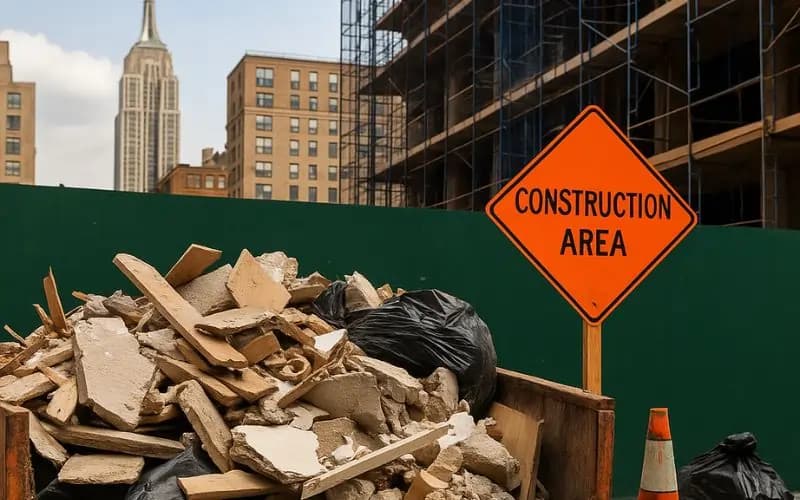
Avoid violations and job site delays. Learn the NYC and NY State construction waste disposal rules every project manager needs to know: permits, penalties, and legal dump sites included.
If you’re a project manager or General contractor running construction sites in New York or New Jersey, you already know the chaos of the final construction phase. Punch lists, trades, inspections: all eyes on the finish line. But if you’re cutting corners on construction waste disposal, you’re setting yourself up for fines, stop-work orders, or worse, not completing the Certificate of Occupancy.
Maintaining compliance with construction waste disposal regulations is crucial not only for avoiding penalties but also for upholding your reputation and trust with clients.
This guide cuts through the vague language and gives you the clear truth about construction debris regulations in NYC and New York State. If you want to pass inspection and avoid violations, read on.
You’re dealing with multiple layers of regulation. Here’s who you answer to:
Project managers are often required to submit permit applications, registration forms, and annual reports to these regulatory agencies to ensure compliance.
Source: NYC DSNY Construction Debris, NYS DEC Solid Waste Regulations
Not all debris is treated the same. Here’s what qualifies:
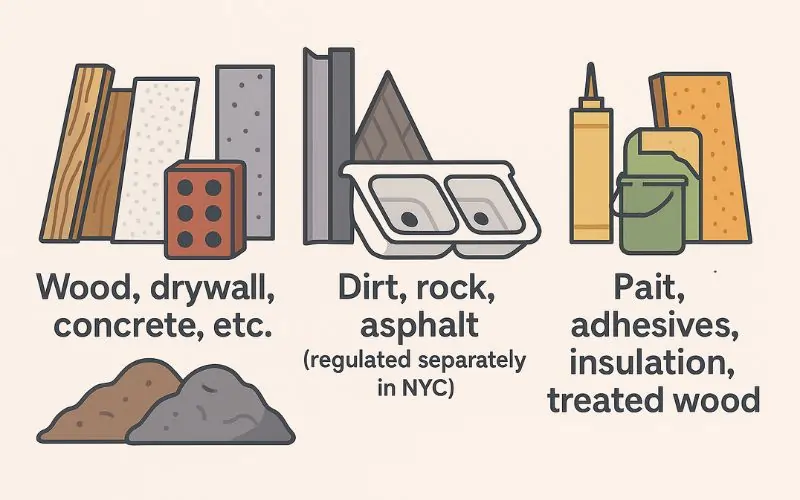
Construction and demolition debris includes a wide range of waste materials such as building materials, masonry, soil, and even items like appliances and office fixtures. These waste materials are generated during renovation, demolition, and construction projects and are often referred to as demolition waste or construction and demolition debris.
Note: Certain items, such as fluorescent lights, are considered hazardous waste and require specialized disposal procedures. Some materials, like treated lumber, plywood, and certain flooring, must be disposed of as trash or garbage and not mixed with recyclables.
And yes, asbestos, lead-based paint, or fuel-contaminated materials? That’s hazardous waste: completely different rules apply.
Source: EPA Construction & Demolition Materials
Project managers and contractors get burned when they assume waste hauling is someone else’s problem. It’s not.
Only registered facilities are authorized to accept construction and demolition debris. Contractors must verify that the facility or hauler they use is approved to accept the specific types and quantities of waste generated.
For large or bulk items, scheduling collection is required. Contractors should coordinate with approved haulers to ensure proper collection and disposal in compliance with local regulations.
“My sub took care of it” won’t hold up when a DSNY inspector issues a violation. So make sure you partner with a reputable and accountable construction cleaning company that knows NYC regulations.
Source: NYC Business Toolbox – Debris Removal
Here’s the part they don’t tell you until you’re already in violation:
Penalties can be even more severe if the amount of debris exceeds limited thresholds set by regulatory agencies. Providing incomplete or inaccurate details in waste manifests or permit applications can also result in additional fines or enforcement actions.
Violations follow the job’s record. That means paperwork hell during close-out and added scrutiny on future permits.
Source: DSNY Rules PDF
Every borough has approved C&D transfer stations. Each facility is designed to accept, process, and recycle a combination of construction and demolition debris generated from various projects, including renovation projects and large-scale construction project activities. These facilities handle a wide range of material types, ensuring that waste from construction, demolition, and renovation is properly processed for recycling or reuse. This diversion of waste from landfills through recycling and reuse helps protect the environment, conserve energy, and promote sustainability.
Facilities require proper documentation and sometimes appointment scheduling. Using efficient waste management practices, such as renting the right size dumpster for your construction project or renovation, can help achieve compliance and environmental goals. Recycling and reuse of materials at these facilities also contribute to achieving LEED certification points and other sustainability benchmarks.
A full guide is available in our companion article: Where to Dispose of Construction Waste in NYC: Borough-by-Borough Guide.
Proper waste management offers significant benefits, including improved safety for your team and employees, reduced environmental impact, and a smoother project close-out.
Need a field-tested, DOB-ready post-construction cleaning checklist?
We specialize in final clean-ups and C&D waste compliance across Manhattan, Brooklyn, Queens, Bronx, and Staten Island. Whether you’re prepping for inspection or closing out a major build, our crews handle it without creating delays.
Book a walkthrough or quote directly here on our NYC Construction Cleaning Services.
Stop trusting debris compliance to chance. In NYC, it’s not just about cleaning up. It’s about proving you did it right.
No, you don’t need a permit to dispose of debris, but your hauler does. All construction debris must be removed by a registered carting company authorized by the NYC Business Integrity Commission (BIC). If you or your subcontractors haul debris without proper registration, it’s considered illegal dumping.
Absolutely not. Mixing C&D waste with household or commercial trash violates DSNY rules and can result in fines. Construction debris must be sorted and transported separately, and certain materials (like concrete or scrap metal) may be required to go to recycling centers.
At minimum, retain disposal manifests, hauler license information, and receipts from transfer or recycling stations. DOB and DSNY can request proof during inspections or audits. Failing to show documentation could lead to delays or citations.
Self-performing looks cheaper until you count the liability. Here is what construction cleanup costs in-house,…
Continue reading
What construction dust actually is, why NYC treats it as a regulated hazard, and how…
Continue reading
In short Substantial completion is not handover-ready. Every construction project manager who has walked a…
Continue readingConstruction Cleaning
Outsourcing construction clean-up is absolutely necessary. In this guide we will navigate you through the entire process, and how to mange it
July 14, 2026
Construction Cleaning
Best way to clean construction dust - Step-by-step construction cleaning process including Best way to clean dust off walls and floors
July 14, 2026
Construction Cleaning
Between substantial completion and handover lies the phase that delays more projects than construction defects: post-construction cleaning. A NYC project manager's guide to running…
July 4, 2026
We deliver the consistent, high-quality cleaning and building maintenance services your business relies on.